FIRE in My Mid-30s: Building Financial Independence Around Family
I'm in my mid-30s, a mother of two and running a business. Here's why financial independence is now a deliberate goal, and how I'm planning for it.
I’ve been thinking a lot more about money lately. Not just earning it, but what we do with it, how we manage it and how we can make it work towards our future.
If that’s been on your mind too, you’re in good company.
This is the first post in The THISS Financial Freedom Journey, a new series here in Money & Freedom. I’ll be sharing what I learn as I get more intentional about saving, investing and planning for the next 10-15 years.
In a nutshell
- I’m in my mid-30s, a mother of two, and I’m making financial independence a more deliberate goal for the next 10-15 years.
- For me, FIRE isn’t about stopping work completely. It’s about security, flexibility and more time with family.
- Income matters, but so do spending, saving, investing and sticking with it.
- You don’t need a big salary, or to have started at 21, to start learning about money.
- I’m planning it all in my own planner: yearly goals, a monthly budget, a monthly review and one big long-term goal.
Five years with family first
When I started THISS Planner in 2020, my son was three and my daughter was seven.
I wanted to be present while they were young, support their learning and help set them up for their school years. Life was busy, and I made a conscious decision to dedicate more of my time to family during those years. Blogging and some of my other work took a step back.
Now the kids are older and a little more independent, and I’ve found myself thinking about another important part of our future: financial independence.
A new chapter for our finances
Just so you know, I’m not starting from zero. I’ve invested before. What I want now is to be much more structured and intentional about it, and about our finances as a whole.
Along the way, I’ve been reading about FIRE, which stands for Financial Independence, Retire Early. The idea is to build up enough savings and investments that work becomes more of a choice, so you have more say over how you spend your time.
There’s more than one way to approach FIRE, and I’ve found it really interesting learning about the differences:
- Lean FIRE: reaching financial independence on a fairly modest lifestyle.
- Fat FIRE: aiming for a more comfortable lifestyle, which usually means a bigger goal.
- Coast FIRE: investing enough early on that, without adding more, it could grow to what you’ll need by a traditional retirement age. You keep working to cover today’s costs.
- Barista FIRE: having enough invested that part-time or flexible work can cover the rest.
(I’ll go through each one properly in the next post in this series.)
For me, it’s not necessarily about stopping work completely. Making planners is still a passion of mine!
What I’d love is more financial security, more flexibility and more time with the people who matter most. I’m exploring what that could look like over the next 10-15 years. It’s a goal I’m working towards, rather than a fixed retirement date.
It’s not just about how much you earn
One thing I keep coming back to is how much our everyday spending habits shape our financial future.
Of course, earning more helps. But it’s just as important to understand how much you spend, how much you save and what you do with the money that’s left over. Those are the parts you can start working on now, whatever your income.
You don’t need an enormous salary to become more intentional with money. Small, consistent decisions really can make a difference over time.
If you’re in your 20s, this bit is especially for you. You don’t need to wait until you’re earning a high salary, buying a house or reaching a particular stage of life before you learn about investing. Understanding budgeting, saving, index funds, diversification and compound growth earlier simply gives you more time to work towards your goals.
I wish I’d spent more time learning about these things when I was younger.
And if you’re in your 30s (or beyond) and feel a little behind? Please don’t compare your situation with anyone else’s. Everyone starts from a different place, and there’s no wrong time to start paying attention.
What I’m learning about long-term investing
Lately I’ve become really interested in index funds and how long-term investing works.
If the term is new to you, an index fund is a fund that aims to roughly match the return of a market index (before fees), rather than trying to beat it. The SEC’s investor education site has a clear definition of an index fund if you’d like to read more.
Compound growth is the other big one. It’s when your returns start earning returns of their own, which is why time matters so much. Try it for yourself below: change the years from 20 to 30 and see what happens to the growth part of the bars.
Try it yourself
Compound interest calculator
Your result
- Starting amount
- Regular deposits
- Total growth
- Total savings
This is an estimate for learning, not a prediction or financial advice. It assumes the same return every year and adds each deposit at the end of its period. Real returns go up and down, and fees, taxes and inflation aren’t included.
Want more room to play with the numbers? The compound interest calculator has its own page too.
I’ve also been looking at historical market performance, including the ups and downs that inevitably happen along the way. Markets don’t move in a straight line. There are periods of growth, corrections and uncertainty, and nobody can reliably predict when the next one will come or how long it will last.
That’s exactly why I want to understand the bigger picture, rather than make decisions based on short-term market movements or headlines.
Later in this series, I’ll look at historical market data properly, using the original sources. That includes the difference between price returns and total returns (which include reinvested dividends), and between nominal returns and returns after inflation, because those differences can change the story quite a bit. And I’ll keep saying this one: past performance doesn’t guarantee future returns.
I’m still learning and reviewing how I approach investing. I want to develop a more consistent strategy that makes sense for our circumstances and long-term goals. I’m not here to tell anyone which investments to buy or pretend I have everything figured out. I simply think understanding your finances and taking an active interest in your future is worthwhile.
How I’m planning it in my THISS Planner
One thing I know about myself: I like having a plan. It’s why I created THISS Planner in the first place!
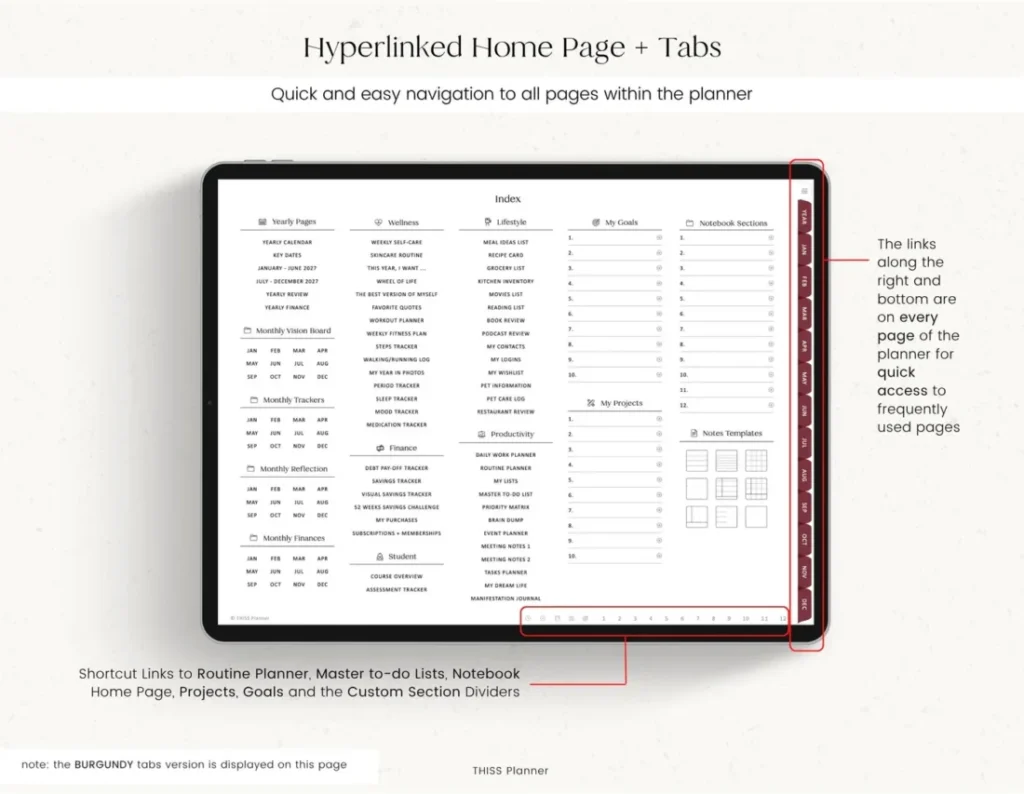
So I’m using my own planning system to get more organized with our financial goals, household budget, savings targets and regular reviews. Here’s how I’m setting it up. (These pages are from the 2027 planner, but any planner with finance and goal pages will do the job.)
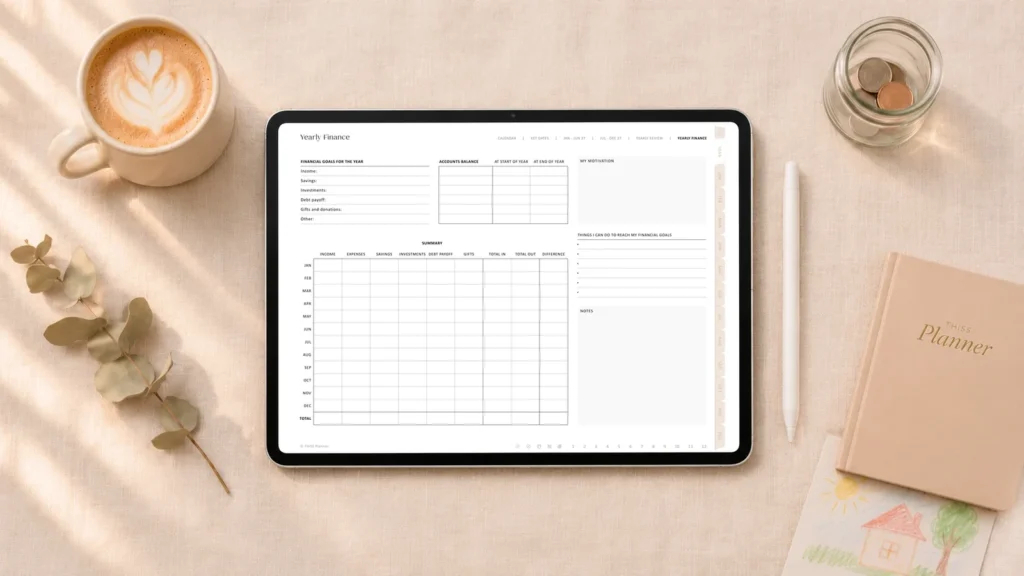
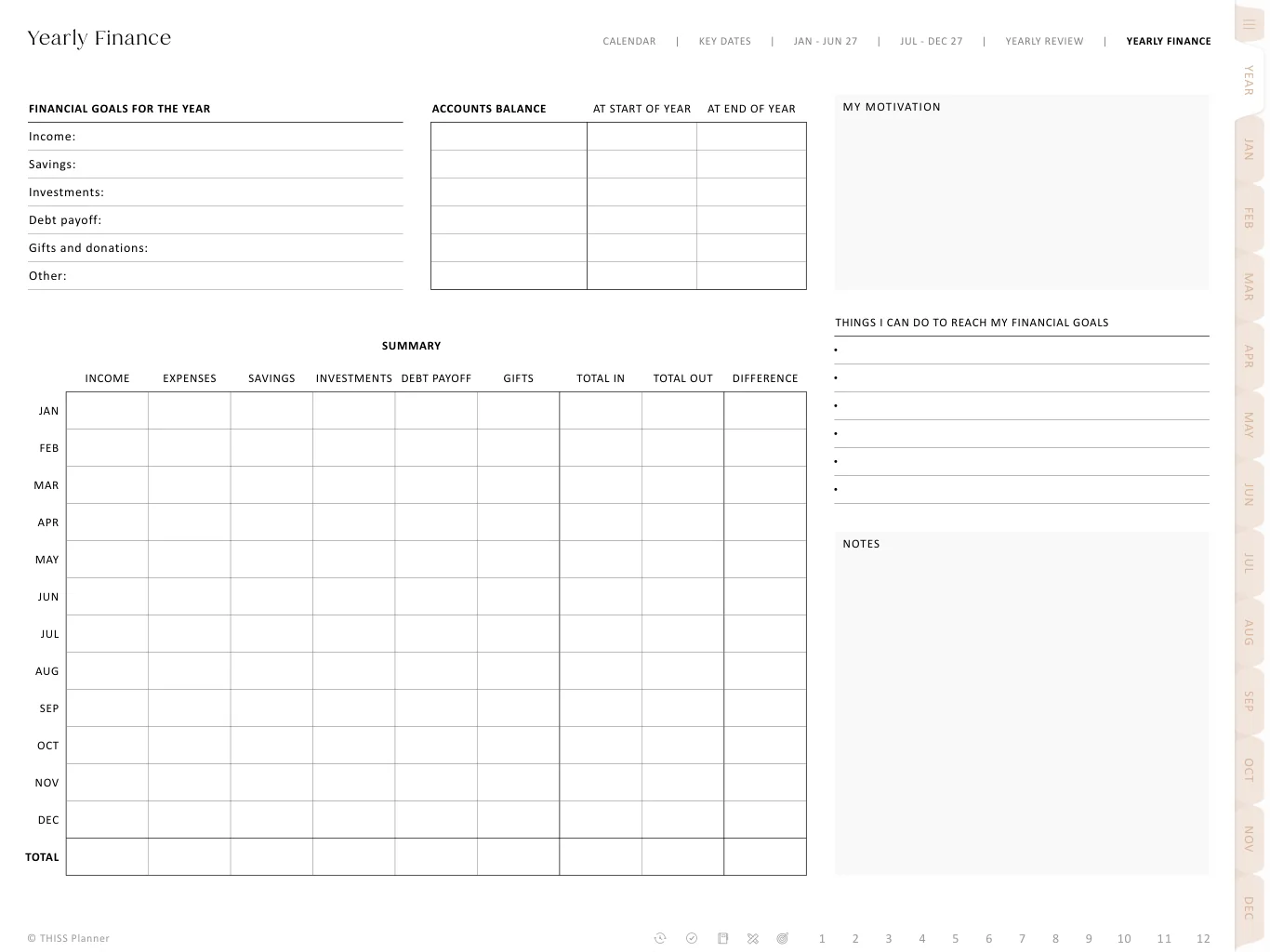
1. The big picture: Yearly Finance
This is where the year’s goals go: income, savings, investments, debt payoff, and gifts and donations. There’s a box for my motivation (my “why”) and a list of things I can do to reach those goals.
The summary table underneath gives each month its own row, including a column for investments, so the whole year is there at a glance. You don’t have to fill in every box, either. Starting with the one or two goals that matter most this year is plenty.
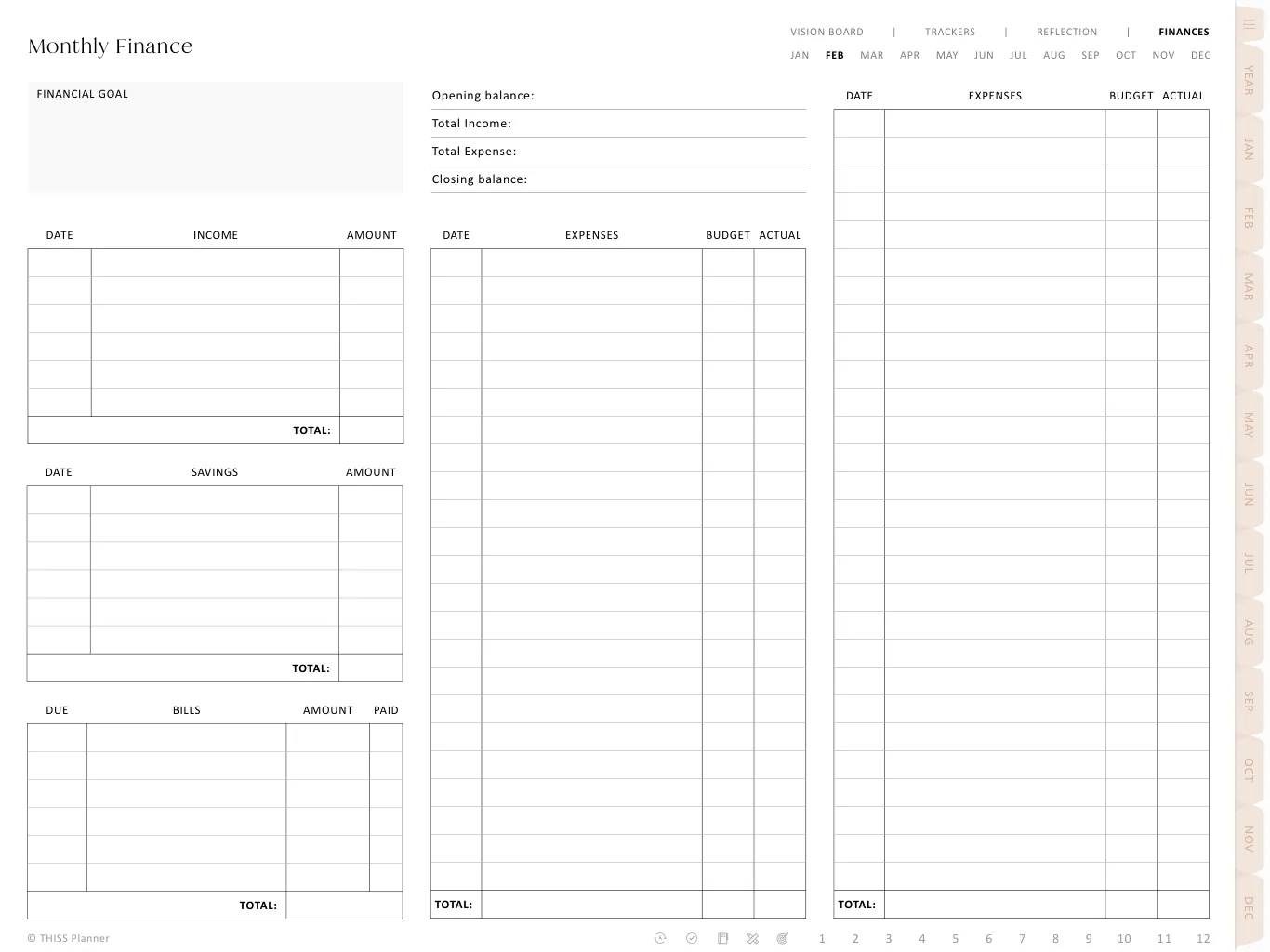
2. Every month: Monthly Finance
This is our household budget: income, savings, bills (with a paid column) and expenses with budget and actual columns, plus opening and closing balances. At the top there’s a box for the month’s financial goal, which keeps the bigger plan in view.
New to budgeting? My guide to budgeting with a digital planner goes through filling in a page like this step by step, and this budget categories list helps you decide what goes where.
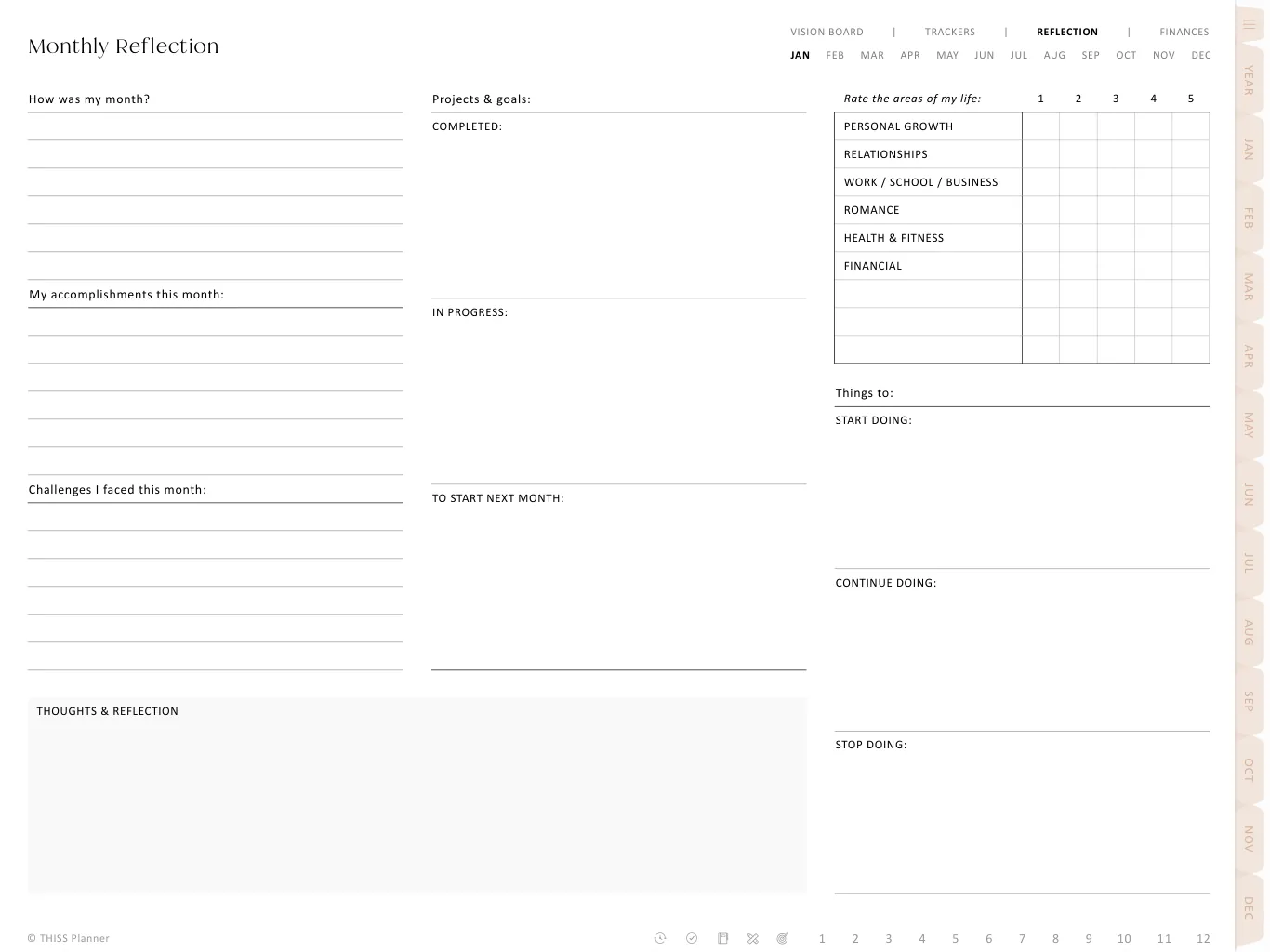
3. At the end of each month: Monthly Reflection
This is where the “are we making progress?” question gets answered. How was the month, what went well, what was hard, and what should I start, continue and stop doing? There’s even a row to rate “Financial” from 1 to 5, alongside the other areas of life.
I want to be able to look back each month and see whether we’re making progress, what needs adjusting and what our next priorities are. It’s not about obsessing over every dollar. It’s about being more intentional and having a clearer picture of where we’re heading.
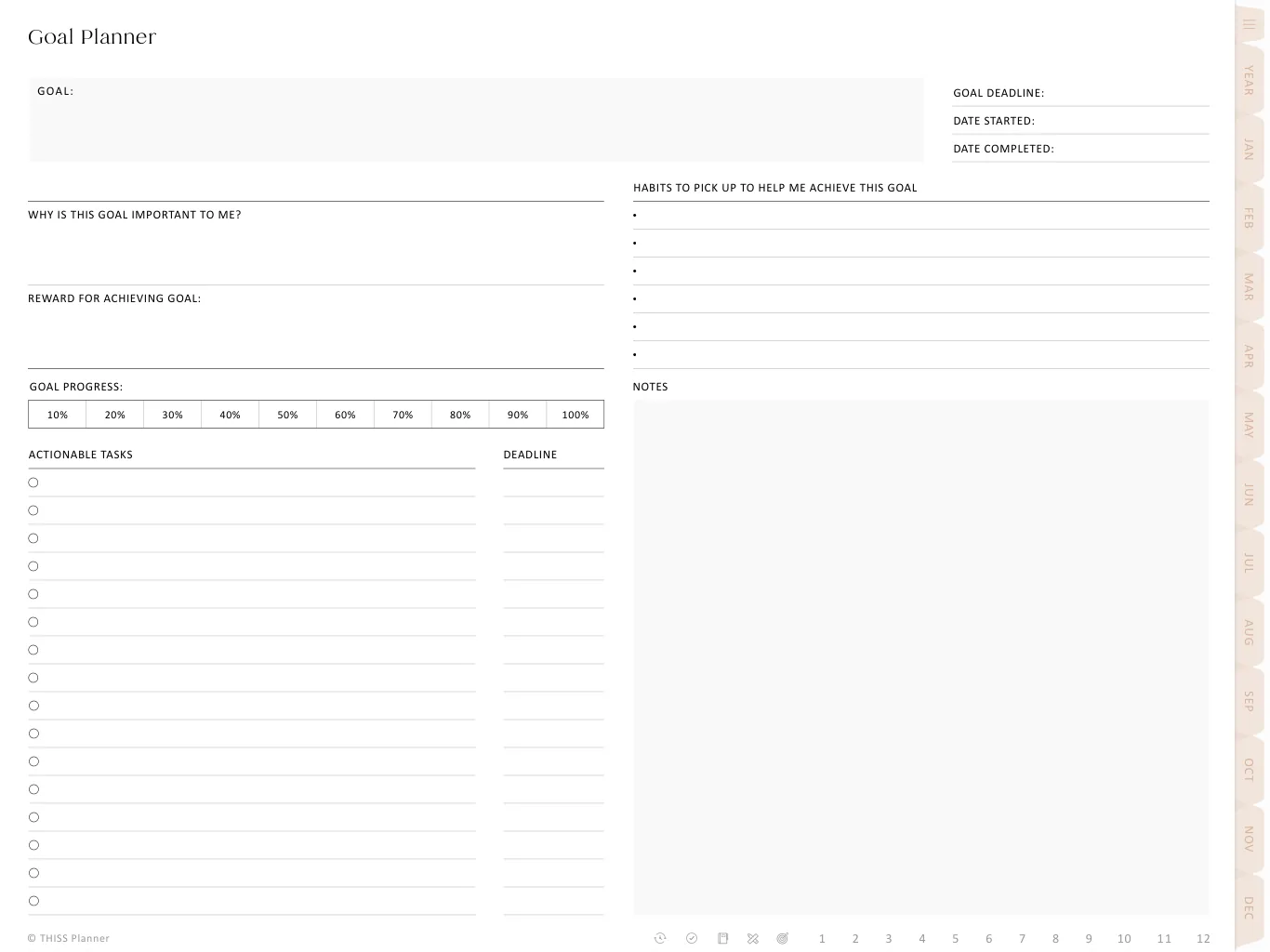
4. The long game: a Goal Planner page
Financial independence is a 10-15 year goal, so it gets a page of its own: the goal, why it matters, the habits that will help, a progress bar and the small, actionable tasks with deadlines.
Breaking a big goal into small steps is what makes it feel doable. (More on that in how to set goals you will actually achieve.)
Just to be clear, these are planner pages you fill in yourself. THISS doesn’t connect to bank or investment accounts, calculate returns or suggest investments. It’s simply where I keep the plan, so I can see it.
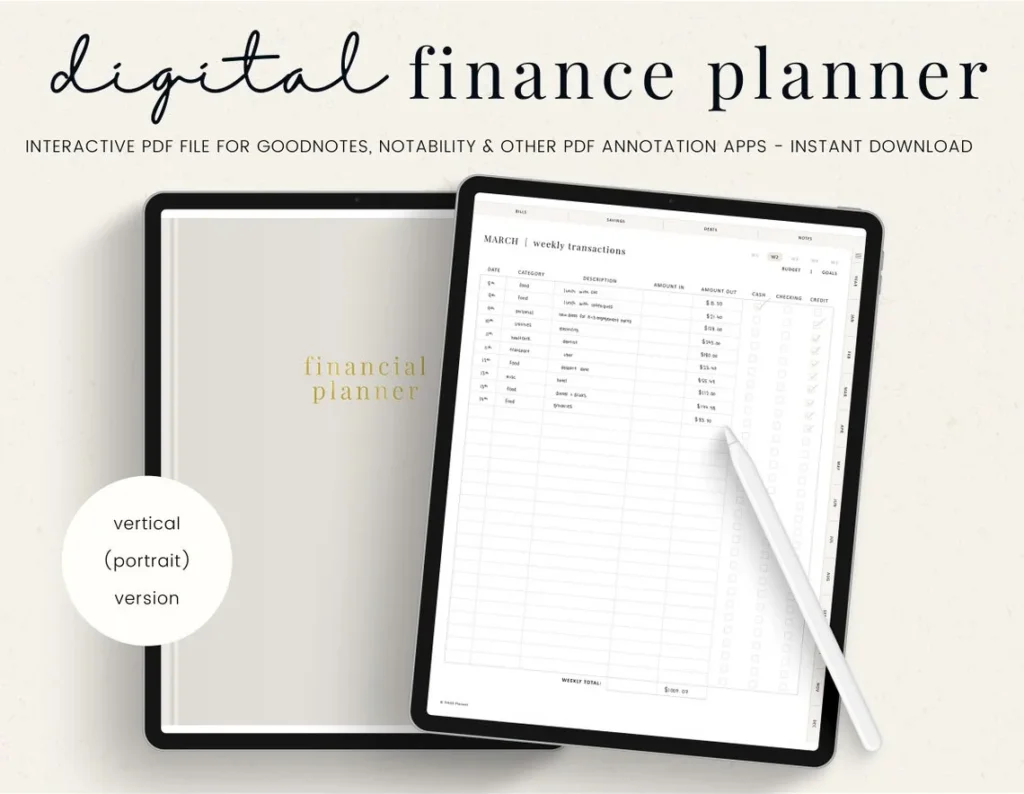
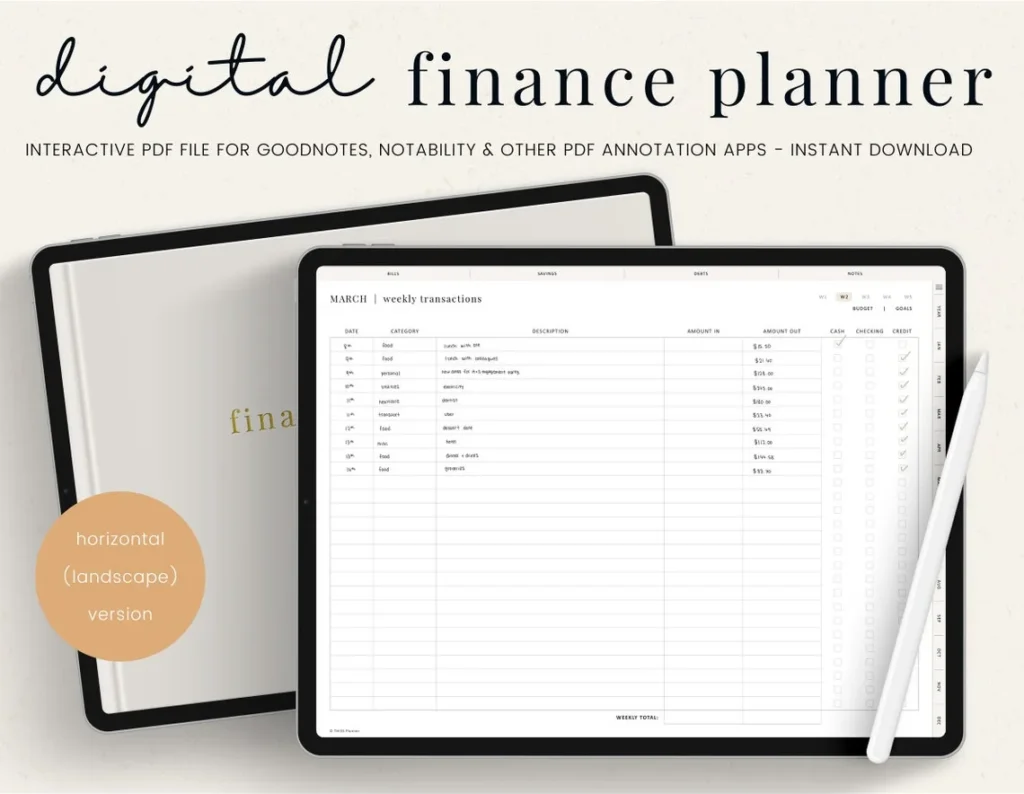
Want to get into the habit of tracking your spending first? There’s a free weekly transactions template in the THISS free library.
Why I’m sharing this journey
I thought it would be interesting to document this part of my life, particularly for anyone in their 20s or 30s who’s starting to think more seriously about their financial future.
You don’t need to have started investing at 21. You don’t need to have everything figured out, and you certainly don’t need to compare your financial situation with someone else’s.
I’m in my mid-30s, raising two children, running a business and now making financial independence a more deliberate priority.
Here’s what’s coming up in the series:
- What FIRE is, and the different types explained
- Index funds for beginners: what I’m learning about long-term investing
- How to calculate your savings rate and set financial goals
- Compound growth, and why time matters
- Market corrections and long-term investing, with real historical data
I’ll share milestones, habits, lessons and percentages where they’re useful, while keeping our private financial balances to ourselves.
Common questions
Is it too late to start investing in your 30s?
I don’t think it’s ever too late to start learning. Time does help compound growth, which is why starting earlier helps, but your 30s can still leave many years ahead. What’s right for you depends on your own situation, so if you’re unsure, a licensed financial professional can help you work it through.
Do you have to retire early to do FIRE?
Not at all. Plenty of people use FIRE ideas for flexibility rather than an early finish, which is where Coast FIRE and Barista FIRE come in. For me, it’s about choice, security and time with family.
Will you share your numbers?
I’ll share savings percentages, habits and general milestones where they’re helpful. Our exact balances will stay private.
This next chapter
I think the important thing is to start paying attention, keep learning and make decisions that support the life you actually want.
For me, that means building financial security while still enjoying these years with our family. And that’s what this next chapter is about. I hope you’ll follow along!
Just so you know: I’m not a licensed financial advisor, and this post is general information and my own story, not financial, investment or tax advice. We’re based in Australia, so the accounts and tax rules we deal with are different from those in the US. When this series covers US accounts like a 401(k) or IRA, I’ll point you to official US sources. Investing involves risk, including the possible loss of money, and past performance doesn’t guarantee future returns. For advice on your own situation, please talk to a licensed professional.
Keep reading: How to budget with a digital planner, Sinking funds explained, The 52-week savings challenge, No-spend challenge rules and How to plan your year.