How to Plan Your Year: A Simple Guide for 2027
A new year is the perfect time to step back and decide what you want it to hold. Here's how to plan your year, from looking back at 2026 to mapping 2027 by quarter.
Every December, there’s that moment when you look at the year ahead and think: this time, I want it to be different.
Planning your year is how you turn that feeling into something real. Not a rigid plan for every week, but a clear idea of what matters, a few goals worth working toward, and a rough map of when you’ll do what.
Here’s a simple way to plan your year, in eight steps. Set aside an hour or two, grab a cup of something warm, and start with a look back.
In a nutshell
- Start by reflecting on the year that’s ending: what worked, and what didn’t.
- Check in on each area of your life to see where you’d like change.
- Choose three to five goals, not fifteen.
- Break each goal into quarterly milestones, then plan January in detail.
- Book in monthly and quarterly check-ins, so the plan keeps up with your life.
Step 1: Look back at the year you’re finishing
Before planning a new year, take a little time with the old one. It’s the best way to avoid making the same plans that didn’t work last time.
Answer a few of these questions on paper or in your planner:
- What am I most proud of this year?
- What were my favorite moments?
- What drained my time or energy?
- What did I start but not finish, and do I still want to?
- What habit made the biggest difference?
- What would I do differently?
- Who do I want to spend more time with?
- What do I want to leave behind?
Don’t rush it. The answers often point straight to next year’s goals.
Step 2: Check in on each area of your life
Next, look at your life as a whole. Give each of these areas a score from 1 to 10 for how happy you are with it right now:
- Health and fitness
- Relationships and family
- Home
- Money
- Work or career
- Personal growth and learning
- Fun and rest
The lowest scores aren’t failures. They’re simply the areas where a small change could make the biggest difference. A wheel of life (a circle split into these areas, colored in by score) makes the gaps easy to see at a glance.
Step 3: Decide how you want the year to feel
Goals are easier to choose once you know what you’re aiming for. Ask yourself: at the end of 2027, how do I want to feel?
Calmer? Healthier? More organized? More adventurous? Some people sum it up in a single word for the year, like “steady” or “brave,” and use it to guide decisions when life gets busy.
Step 4: Choose three to five goals
Now pick the goals that match your reflections and the areas you’d like to improve. Keep the list short. Three to five goals you work on steadily will take you much further than a long list you forget by March.
For each goal, write down:
- What exactly you want to achieve
- Why it matters to you
- How you’ll know you’ve done it
- Roughly when you want to finish
If you’d like a step-by-step method, here’s how to set goals you will actually achieve.
Step 5: Break the year into quarters
A whole year is a long time. Splitting it into four quarters of about three months each makes your goals feel much more doable, and gives you natural moments to check in.
For each goal, decide what progress looks like by the end of each quarter. Here’s an example with two made-up goals:
| Goal | Jan to Mar | Apr to Jun | Jul to Sep | Oct to Dec |
|---|---|---|---|---|
| Read 24 books | 6 books, set up a reading journal | 12 books | 18 books | 24 books, year-end wrap-up |
| Save for a summer trip | Set the budget and monthly amount | Book flights and stay | Take the trip | Review and start next year’s fund |
Quarterly milestones also make it easier to spread your goals out. Not everything has to start in January.
Step 6: Add the year’s big dates
Next, add the dates you already know: birthdays, holidays, school breaks, trips, renewals and busy seasons at work. Seeing them early helps you plan around them, instead of being surprised by a packed month.
It’s also worth noticing the quieter months. Those are the perfect time to schedule a big project or a fresh start on a goal. (If you’re setting up a new planner, here’s how to set up your digital planner for 2027, including where to put your important dates.)
Step 7: Plan January in detail
You don’t need to plan every month now. Plan January properly, and let the rest of the year stay flexible.
- Write the first small step for each goal on your January page.
- Choose one or two habits to start, like a daily walk or ten minutes of reading. (Here are 100 habit tracker ideas to choose from.)
- Block time in your first week for anything that needs setting up, like a budget or a reading list.
A strong first month builds momentum for the rest of the year.
Step 8: Book in your check-ins
The most important part of a yearly plan is coming back to it. Life changes, and your plan should change with it.
- Weekly: a quick look at your goals while you plan your week.
- Monthly: what moved forward, what didn’t, and what’s next?
- Quarterly: are your goals still right? Adjust, swap or drop any that no longer fit.
Put the quarterly check-ins in your calendar now: early April, July and October.
Planning your year in a digital planner
A digital planner keeps your reflections, goals and calendar in one place, so your yearly plan is never more than a tap away.
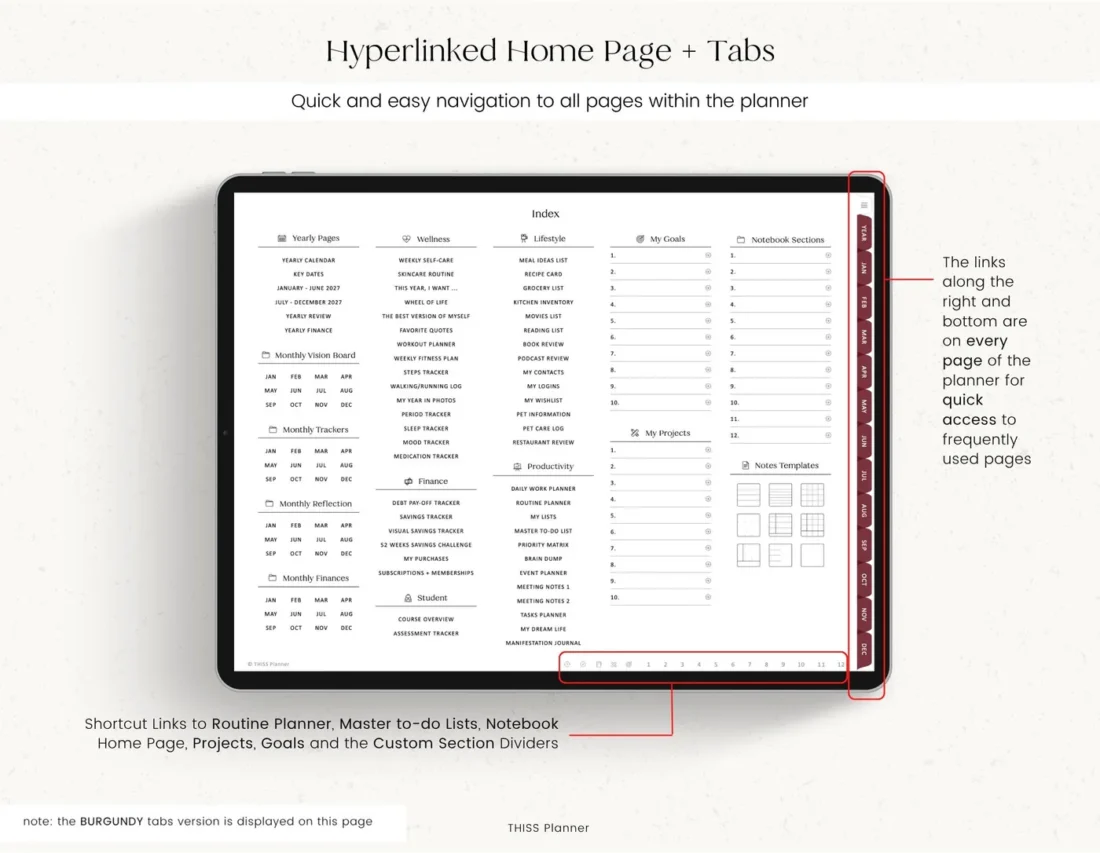
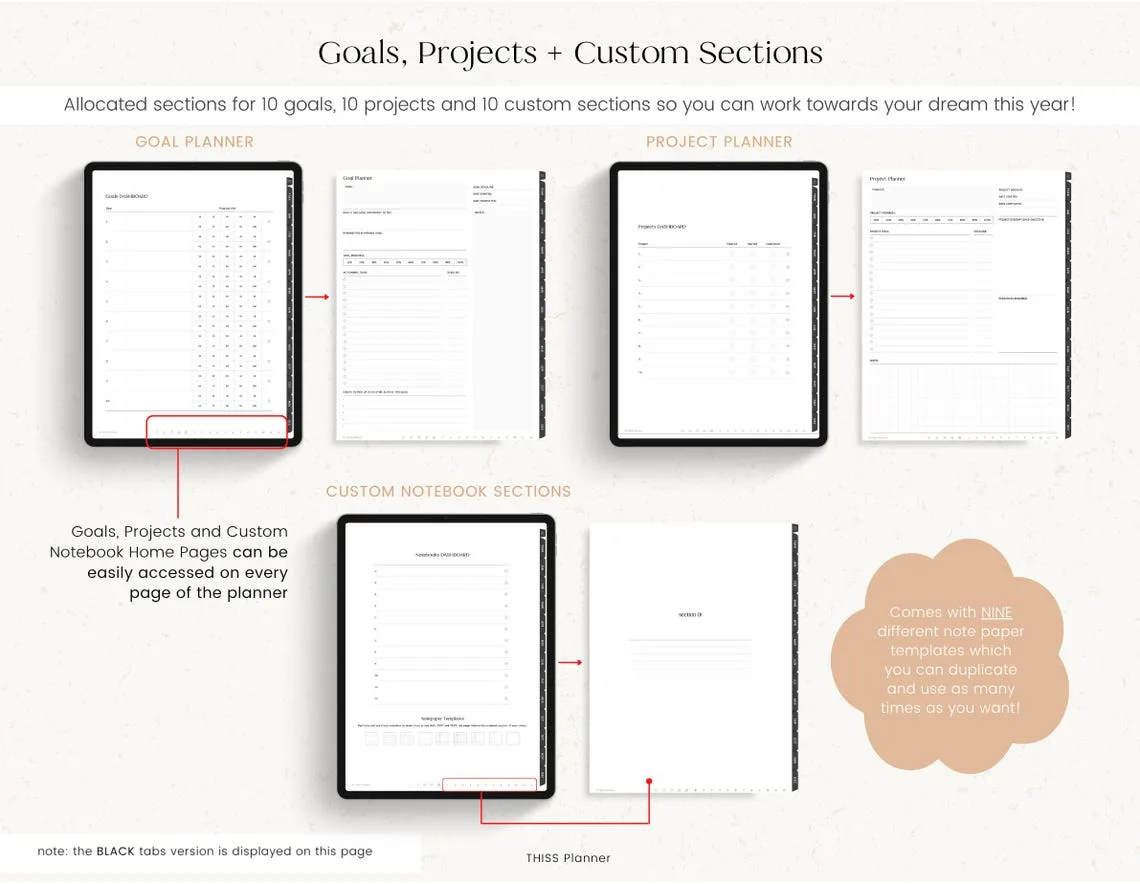
The THISS 2027 Digital Planner includes a yearly overview, year at a glance and yearly review, plus This Year I Want, a vision board, a wheel of life and the best version of myself pages for Steps 1 to 3. Monthly reflection pages and weekly check-ins make Step 8 easy, too.
Common questions
When should I start planning next year?
Any time from late November to early January works well. Planning before January 1 means you start the year with a clear idea of what you want, but it’s never too late to plan.
How many goals should I set for the year?
Three to five is plenty. Fewer goals means more time and energy for each one, which makes you much more likely to finish them.
What’s the best way to reflect on the past year?
Set aside quiet time, look back through your calendar and photos, and answer a few reflection questions. Write the answers down, so you can look back on them next year too.
What if my plans change during the year?
They will, and that’s fine. Use your quarterly check-ins to adjust your goals. A plan is a guide, not a promise.
Here’s to a wonderful 2027!
Keep reading: How to set goals you will actually achieve, How to set up your digital planner for 2027 and How to stick with your digital planner all year.