Sinking Funds Explained: Categories, Examples & How to Start
Car insurance, holiday gifts, the yearly renewal you forgot about. Here's how sinking funds work, with a worked example, category ideas and simple steps to start.
Car insurance. Holiday gifts. The yearly membership that renews the same week as a birthday.
None of these costs are a surprise, yet they still land like one when the bill arrives all at once. Sinking funds fix that. Instead of finding a big amount in one month, you set aside a small amount every month, so the money is ready when the bill is.
Here’s how sinking funds work, how to work out what to save, and how to start one this month.
In a nutshell
- A sinking fund is money you set aside, a little at a time, for a cost you know is coming.
- To work out the monthly amount, divide the total by the number of months until it’s due.
- Sinking funds are for planned costs. An emergency fund is for the unexpected.
- Start with three to five funds for your biggest non-monthly costs.
- Track each fund’s target, due date and balance, and check in once a month.
What is a sinking fund?
A sinking fund is a savings pot for one specific, expected cost. You know roughly how much it will be and when it’s due, so you save toward it in small, regular amounts.
The idea is simple: big yearly or seasonal costs turn into small monthly ones. A $600 holiday budget feels very different as $50 a month than as one December bill.
Most of the costs that “break” a budget aren’t true surprises. They’re just costs that don’t come every month, so they’re easy to forget until they arrive. Sinking funds give each one a plan.
Sinking fund vs emergency fund
Both are savings, but they do different jobs.
- A sinking fund is for a planned cost: you know what it’s for and roughly when you’ll need it. Think car registration, holiday gifts or a vacation.
- An emergency fund is for the costs you can’t predict, like an urgent repair, a medical bill or a drop in income.
Keeping them separate protects your emergency fund. When the car insurance renews, the money comes from its sinking fund, and your safety net stays untouched for real emergencies.
How to work out how much to save
For each fund, you need two numbers: the total cost and the number of months until it’s due. Then:
Monthly amount = total cost ÷ months until it’s due
So a $900 cost due in 9 months works out to $100 a month.
Paid every two weeks instead of monthly? Multiply the monthly amount by 12, then divide by 26. That $100 a month becomes about $46.15 a paycheck.
A worked example
Say it’s January, and these costs are coming up this year. (The numbers are only an example, so swap in your own.)
| Sinking fund | Total | Months until due | Per month |
|---|---|---|---|
| Holiday gifts | $600 | 12 | $50 |
| Car insurance (six-month premium) | $720 | 6 | $120 |
| Summer vacation | $1,500 | 10 | $150 |
| Car maintenance and tires | $480 | 12 | $40 |
| Yearly subscriptions and memberships | $180 | 12 | $15 |
| Total | $3,480 | $375 |
Instead of finding $3,480 across a handful of stressful months, that’s $375 a month, or about $173 a paycheck if you’re paid every two weeks.
If $375 is more than your budget has room for right now, that’s useful to know too. You can start with the most urgent funds, lower a target, or push a goal (like the vacation) a little later.
Sinking fund categories
Not sure what to save for? Look back through the last 12 months of your bank statements and note every cost that didn’t come monthly. These are the usual suspects:
Car
- Registration and inspection
- Insurance, if you pay it every six or 12 months
- Maintenance, oil changes and tires
Home
- Repairs and maintenance
- Replacing appliances and furniture
- Property taxes or insurance, if you pay them yourself
Family and celebrations
- Holiday gifts and decorations
- Birthdays and anniversaries
- Back-to-school costs
- Kids’ activities, camps and sports fees
- Weddings, showers and other events
Health and personal
- Dental, eye exams and glasses
- Haircuts and personal care
- Clothing and shoes
Pets
- Vet checkups and vaccinations
- Grooming and boarding
Bills and subscriptions
- Yearly subscriptions and memberships
- Annual fees and renewals
Fun and goals
- Vacations and travel
- A new phone or laptop
- Hobbies, classes or a course
You don’t need all of these. Most people only need a handful, and you can add more as you go.
How to start a sinking fund in 5 steps
- List your non-monthly costs. Use your bank statements, your calendar and the list above. Write down each cost, roughly how much it is and when it’s due.
- Choose three to five funds. Start with the biggest costs, or the ones due soonest. A few funds you keep up with beat a long list you abandon.
- Work out the monthly amount. Divide each total by the months until it’s due, then add them up.
- Decide where the money lives. Many people use a separate savings account, so sinking fund money isn’t mixed in with everyday spending. Some banks let you split savings into named buckets. Or keep one savings account and track each fund’s balance yourself.
- Save on payday. Move the money as soon as you’re paid, before you start spending. If your bank lets you set up an automatic transfer, it happens without you thinking about it.
How to track your sinking funds
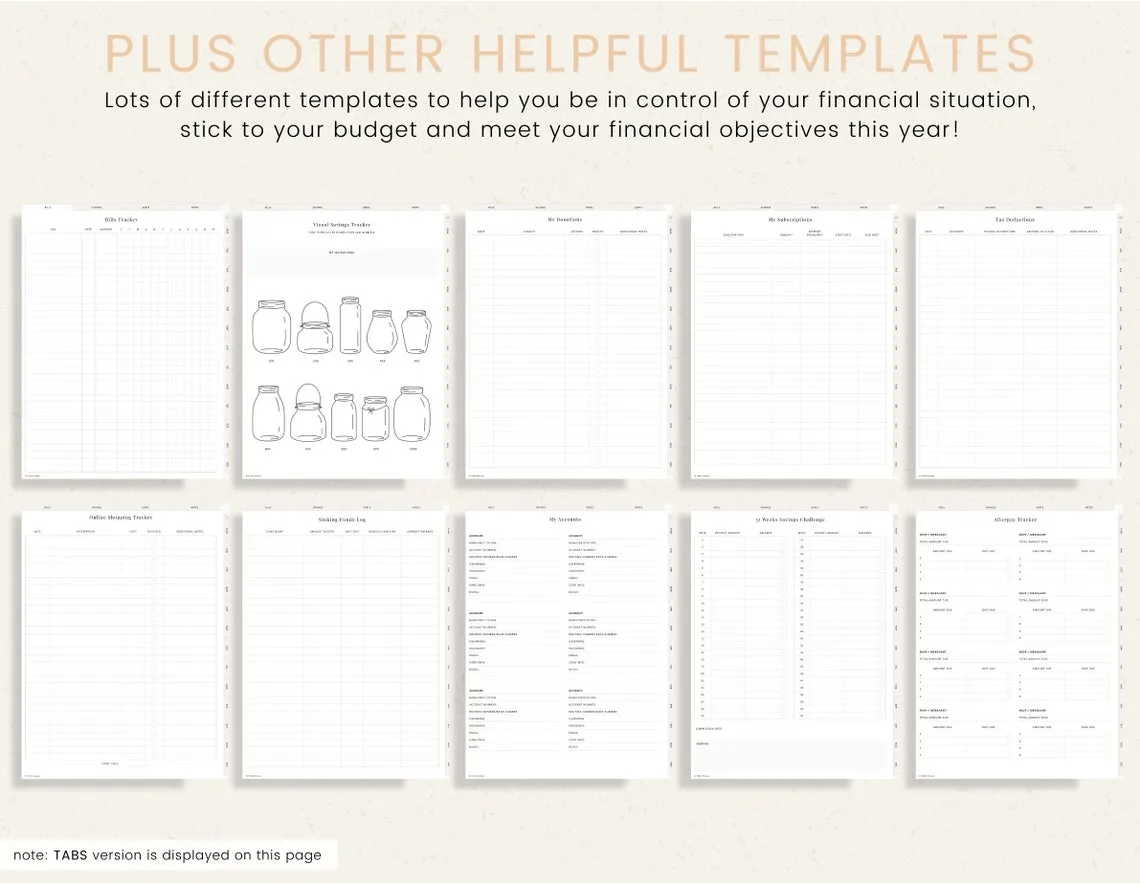
Whether your money sits in one account or several, a simple log keeps it clear. For each fund, write down:
- The fund’s name
- The total you need
- When it’s due
- The monthly amount
- The current balance
Once a month, update each balance. When a bill arrives, pay it from its fund and note what you spent. If there’s money left over, keep it in the fund for next time, or move it to another goal.
If you use a digital planner, give your sinking funds their own page, and add the monthly total to the savings part of your budget. That way the money is set aside before the month’s spending starts. (Here’s how to budget with a digital planner, step by step.)
Starting late? Here’s what to do
If a cost is only a few months away, the monthly amount can look scary. A few ways to handle it:
- Save what you can now, and cover the rest from your budget that month. Every dollar saved ahead is one less dollar to find at once.
- Lower the cost, like a smaller gift budget or a shorter trip.
- Start next year’s fund early. Once this year’s bill is paid, begin saving for the next one right away, so it’s never a rush again.
Common questions
Is a sinking fund the same as a savings account?
Not quite. A sinking fund is a purpose for money, while a savings account is a place to keep it. You can keep several sinking funds in one savings account, as long as you track each fund’s balance.
How many sinking funds should I have?
There’s no right number. Three to five is a good place to start, then add more once saving for them feels routine.
What’s the difference between a sinking fund and an emergency fund?
A sinking fund is for a cost you can plan for, like insurance or holiday gifts. An emergency fund is for costs you can’t predict. Keeping them separate means a planned bill never eats into your safety net.
What happens to leftover money in a sinking fund?
That’s up to you. You can leave it in the fund to lower next year’s monthly amount, or move it to another fund or goal.
Can I use sinking fund money for something else?
You can, but then the original cost has less money waiting for it. If you do borrow from a fund, write it down and plan how you’ll top it back up.
Start with one fund
You don’t need a perfect system to begin. Pick the one cost that always catches you out, work out the monthly amount, and set it aside this payday. Next year, that bill will just be another line in your budget.
If you’d like a place to keep it all, the THISS Finance and Budget Planner has a sinking funds log, savings and debt trackers, a bills tracker and monthly budget pages.
This article is general information to help you organize your money. It isn’t financial advice, so for advice on your own situation, please talk to a qualified professional.
Keep reading: Budget categories list, How to budget with a digital planner, Christmas planning checklist and How to set goals you will actually achieve.