100 Habit Tracker Ideas for Your Planner
Not sure what to put in your habit tracker? Here are 100 habit ideas, from health and home to money and mindset, plus how to choose the right few to start with.
A habit tracker is one of the simplest pages in any planner: a list of habits down the side, the days of the month across the top, and a box to tick each day.
The tricky part is deciding what to track. Here are 100 habit tracker ideas to choose from, grouped by area of life, plus how to pick the right few and actually stick with them.
In a nutshell
- Track three to five habits at a time, not twenty.
- Choose habits that are small and specific, like “read 10 pages,” not “read more.”
- Pick habits that support a goal you care about.
- Tick each day as you go, and review your tracker at the end of the month.
- Missed a day? Just start again the next day.
How to choose habits to track
Before the list, a quick filter. The best habits to track are:
- Small: easy enough to do on a busy day. “Walk for 10 minutes” beats “go to the gym every day.”
- Specific: clear enough that you know whether you did it. “Drink water with every meal” is easier to tick than “stay hydrated.”
- Meaningful: linked to a goal or a feeling you want. If a habit doesn’t matter to you, you won’t keep it.
Start with three to five habits. Once they feel automatic, swap them for new ones.
100 habit tracker ideas
Health
- Drink a glass of water when you wake up
- Drink water with every meal
- Eat a vegetable with lunch and dinner
- Eat breakfast
- Take your vitamins or medication
- No soda
- Cook dinner at home
- Pack a healthy snack
- Floss
- Wear sunscreen
- Stretch for five minutes
- Stand up and move every hour
Fitness
- Walk for 10 minutes
- Hit your step goal
- Do a workout
- Go for a run
- Do a Pilates or yoga session
- Take the stairs
- Do a short strength routine
- Get outside for some fresh air
Sleep
- In bed by a set time
- Wake up at the same time
- No phone in bed
- No caffeine after lunch
- Wind down with a book
- Get seven or more hours of sleep
Mind and wellbeing
- Write in a journal
- Write down three things you’re grateful for
- Meditate for five minutes
- Take a few slow, deep breaths
- Read for 10 minutes
- Say an affirmation
- Spend time in nature
- Do something creative
- Track your mood
- Take a proper lunch break
- Do one thing just for fun
Self-care
- Morning skincare routine
- Evening skincare routine
- Take a bath or long shower
- Do your hair or nails
- Have a no-plans evening
- Listen to music or a podcast you love
- Say no to something you don’t want to do
Home
- Make your bed
- Empty the dishwasher
- Clean as you cook
- Do a 10-minute tidy
- Do a load of laundry
- Wipe down the kitchen counters
- Take out the trash and recycling
- Water the plants
- Declutter one drawer or shelf
- Reset the living room before bed
- Prep tomorrow’s lunch
- Plan tomorrow’s dinner
Money
- Write down what you spend
- No-spend day
- Check your bank balance
- Move money to savings
- Bring lunch from home
- Make coffee at home
- Wait 24 hours before buying non-essentials
- Unsubscribe from one shopping email
- Sell or donate one thing you don’t use
- Update your budget
Productivity and work
- Plan your day the night before
- Choose your top three priorities
- Do the hardest task first
- Inbox zero (or close to it)
- Work in focused blocks
- Take a break away from your desk
- Review your week on Sunday
- Write a to-do list
- Clear your desk at the end of the day
- Finish work on time
Learning and growth
- Practice a language for 10 minutes
- Learn something new
- Listen to an educational podcast
- Practice an instrument
- Work on a side project
- Take an online lesson
- Write 200 words
- Practice a skill for your career
Relationships
- Call or text a friend
- Call your parents or grandparents
- Have a phone-free dinner
- Play with your kids
- Plan a date night
- Write a thank-you note
- Do something kind for someone
- Give someone a genuine compliment
Digital wellbeing
- Less than an hour on social media
- No phone for the first 30 minutes of the day
- No screens at dinner
- Turn off notifications after work
- Delete old photos and files
- Back up your planner and phone
- Read instead of scrolling
- One screen-free hour before bed
How to set up a habit tracker
- List your habits down the left side of the page, one per row.
- Add the days of the month across the top, one column each.
- Tick or color a box each day you complete a habit.
- Review at the end of the month. Which habits stuck? Which were hard? Keep, swap or adjust them for next month.
A monthly tracker works well because it’s long enough to build a streak, and short enough to start fresh if a month doesn’t go to plan.
Tips to keep your habits going
- Attach a new habit to an old one. For example, stretch while the kettle boils, or write in your journal after dinner.
- Make it easy to start. Lay out your workout clothes, or leave your book on your pillow.
- Keep your tracker where you’ll see it. If it’s in your planner, check it when you plan your day.
- Don’t aim for a perfect month. A tracker that’s 70% full still shows real progress.
- If you miss a day, start again the next day. One missed day doesn’t undo your progress.
Many of these ideas come from James Clear’s book Atomic Habits. Here’s how Atomic Habits helps with planning every day, with the four laws of behavior change turned into planner habits.
Habit tracking in a digital planner
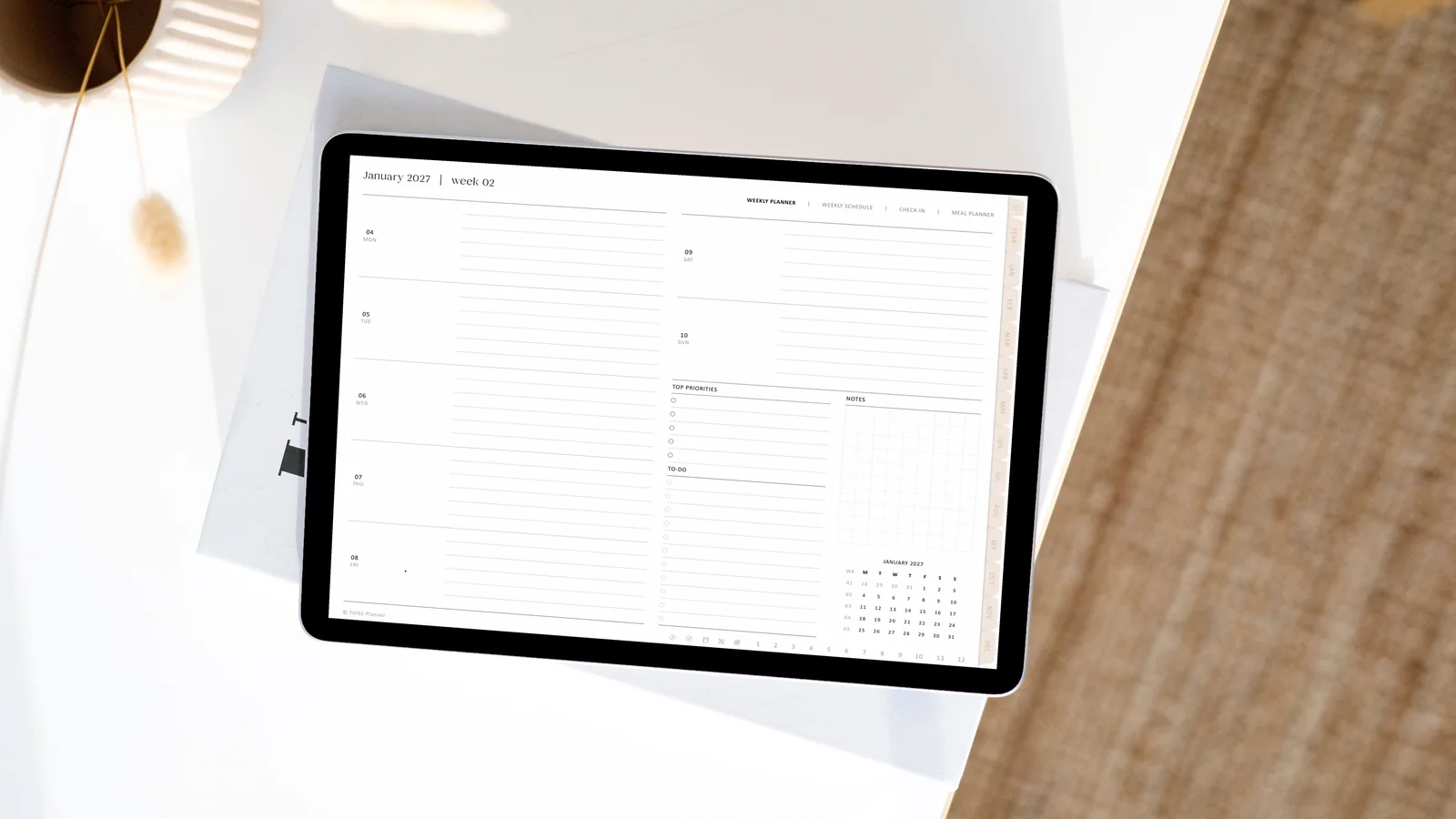
A digital planner makes habit tracking easy: your tracker sits right next to your daily and weekly pages, and you can copy a fresh tracker page every month.
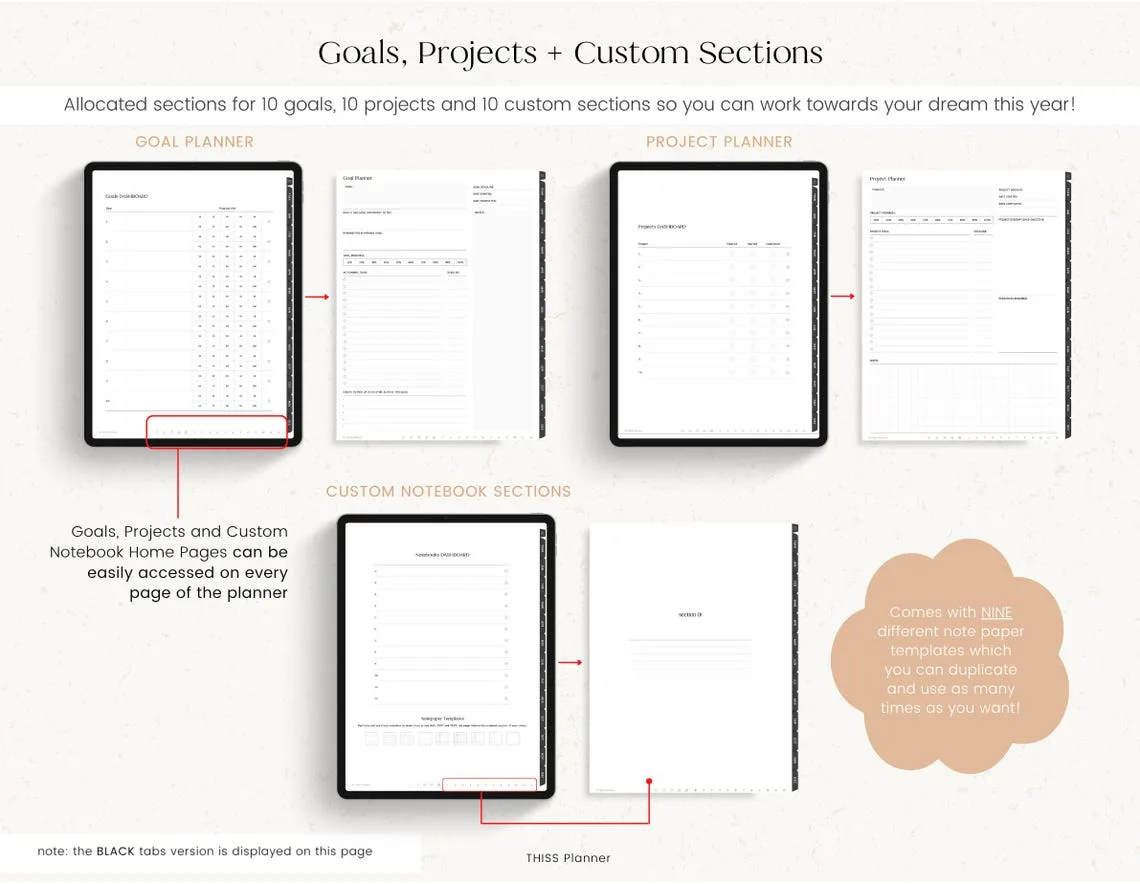
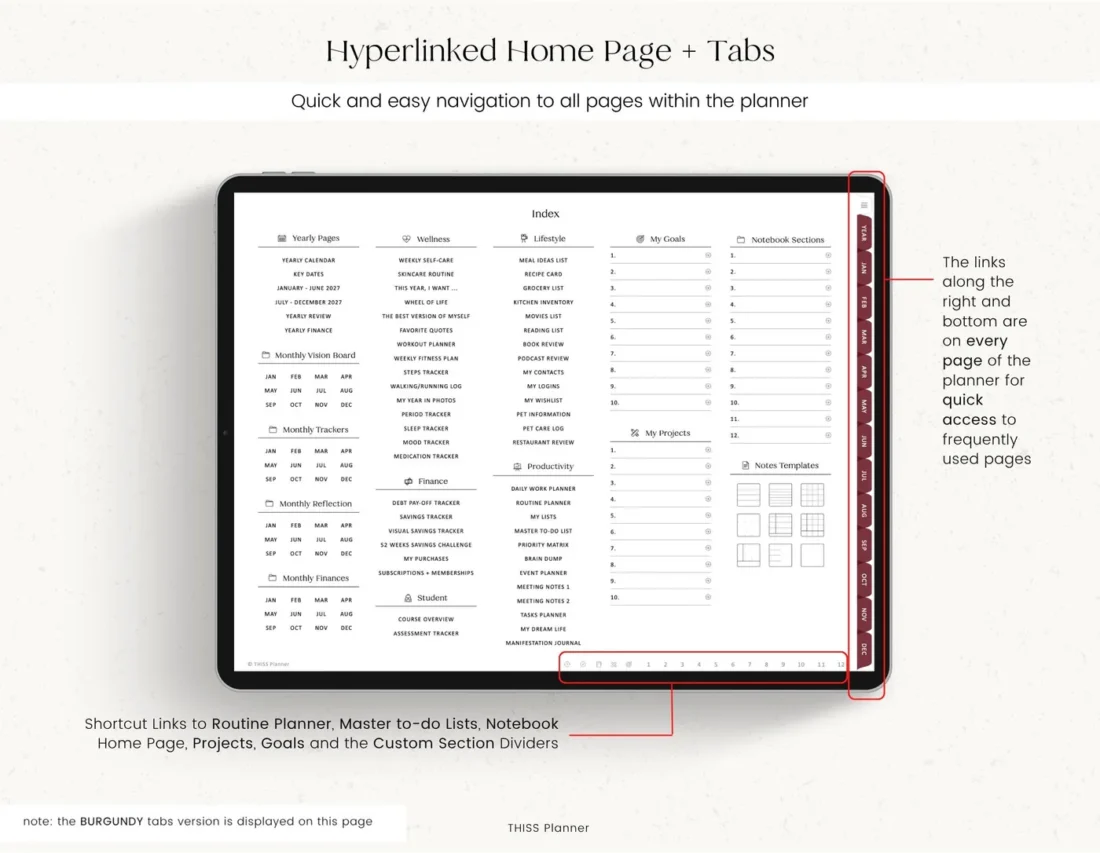
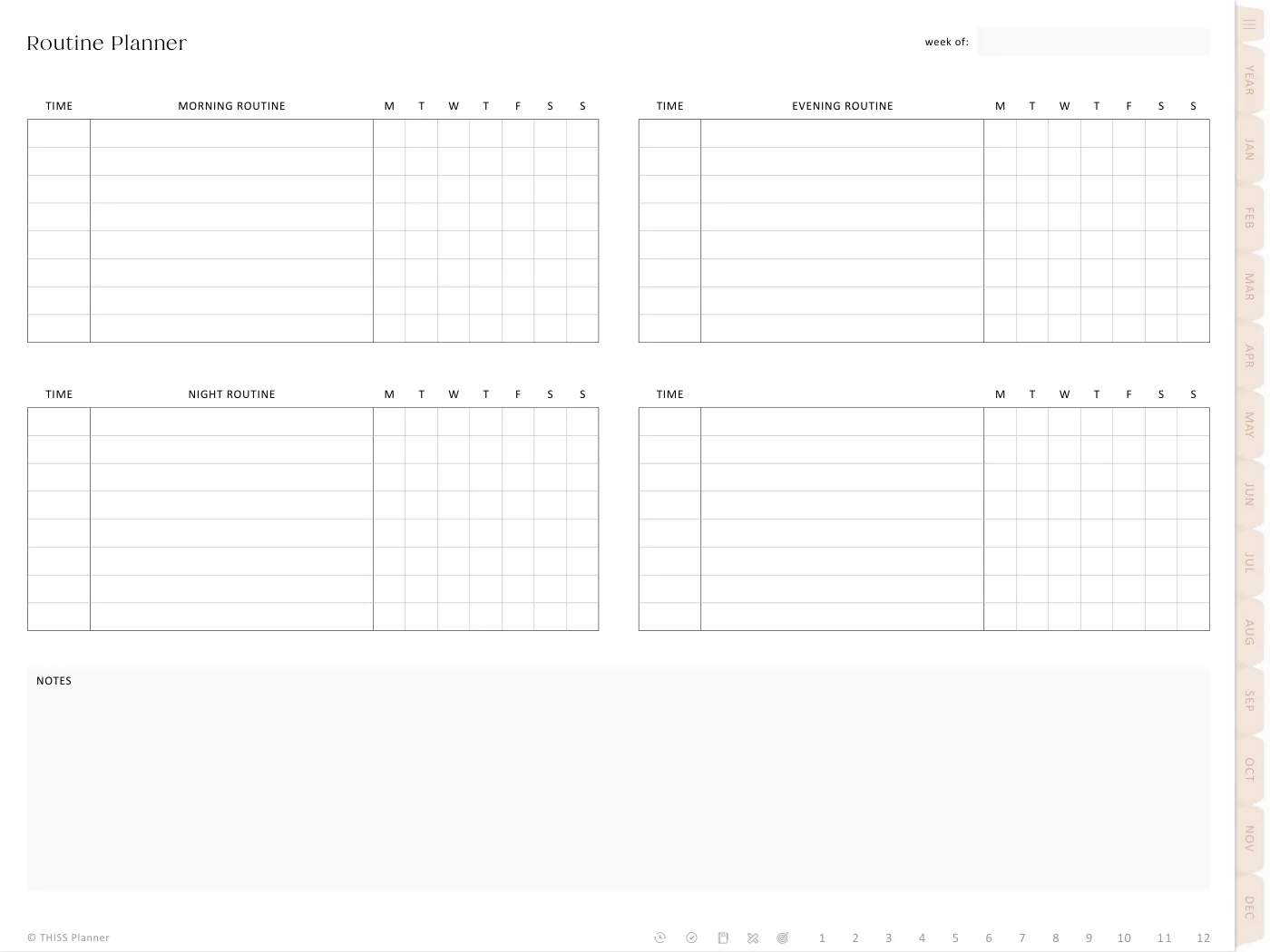
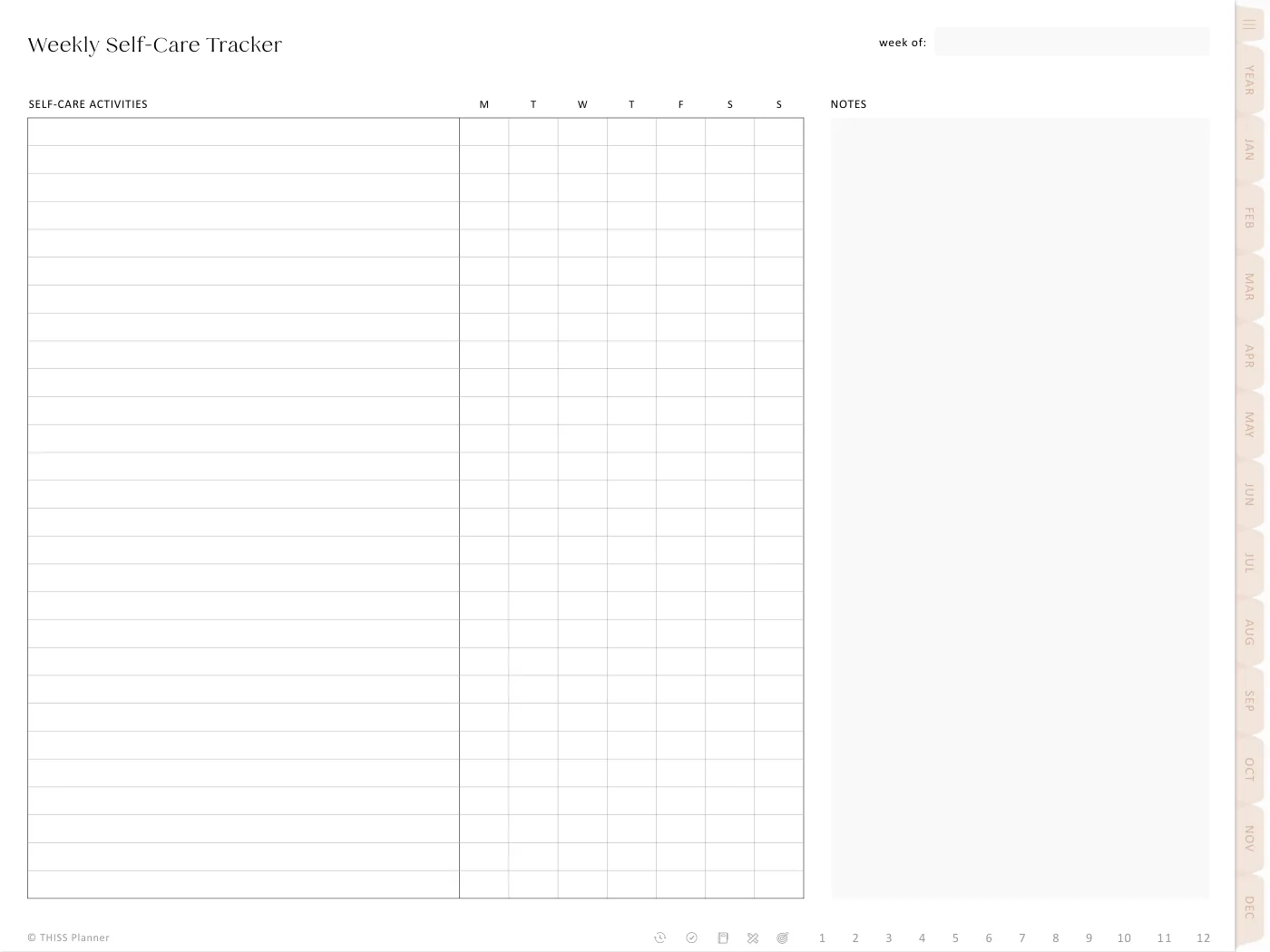
The THISS 2027 Digital Planner includes habit trackers and a routine planner for morning and evening routines, plus a weekly self-care page, a sleep tracker, a mood tracker and a steps tracker.
Common questions
How many habits should I track?
Three to five is a good number. Tracking too many at once makes it hard to keep up, and it’s easy to give up on the whole tracker.
What should I put in my habit tracker?
Choose small daily actions that support a goal, like walking for 10 minutes, reading 10 pages or writing down what you spend.
Should I track habits daily or weekly?
Track daily habits daily. For things you do a few times a week, like workouts, you can track them daily and aim for a weekly total.
How long does it take to build a habit?
It varies from person to person and habit to habit, so focus on showing up consistently rather than on a set number of days.
Pick your first three
Choose three habits from the list, add them to your tracker, and start today. Small habits really do add up over a year.
Keep reading: How Atomic Habits helps me plan every day, How to plan your year and 25 daily affirmations that will improve your life.