Pilates always looks so calm from the outside, doesn’t it? Slow, controlled movements. Gentle breathing. Everyone looking graceful and serene.
Then you try it yourself, and suddenly you’re shaking through a move that looked SO easy a minute ago, finding muscles you didn’t even know you had!
I’ve recently started Pilates, and I’m very much a beginner. I’m still learning the moves, the lingo and how to stay balanced. But I’m learning a lot, and I wanted to share it while it’s all still fresh.
So this is Pilates for beginners, from an actual beginner. I’ll cover what Pilates is, what to expect from your first classes, how to build a routine, and how I fit it into my week with my digital planner.
Just so you know, I’m not a Pilates instructor or a health professional. If you have an injury or a health condition, or you’re pregnant, check with your doctor or physical therapist before you start, and let your instructor know.
In short
- Pilates is a low-impact form of exercise that focuses on core strength, control, posture and breathing. Mat and reformer are the two types you’ll see most.
- Expect it to feel slower than other workouts, but harder than it looks. Tell your instructor you’re new.
- Build a routine by booking or scheduling sessions ahead and putting them on your weekly schedule.
- Track each session with a few notes on how it felt, so you can see your progress over time.
What is Pilates, in plain English?
Pilates is a low-impact form of exercise that focuses on your core, posture, control and breathing. The movements are usually slow and precise, and the focus is on doing each one well.
There are two main types you’ll come across:
- Mat Pilates is done on a mat, sometimes with small equipment like a ball, ring or band. You can do it in a class or at home.
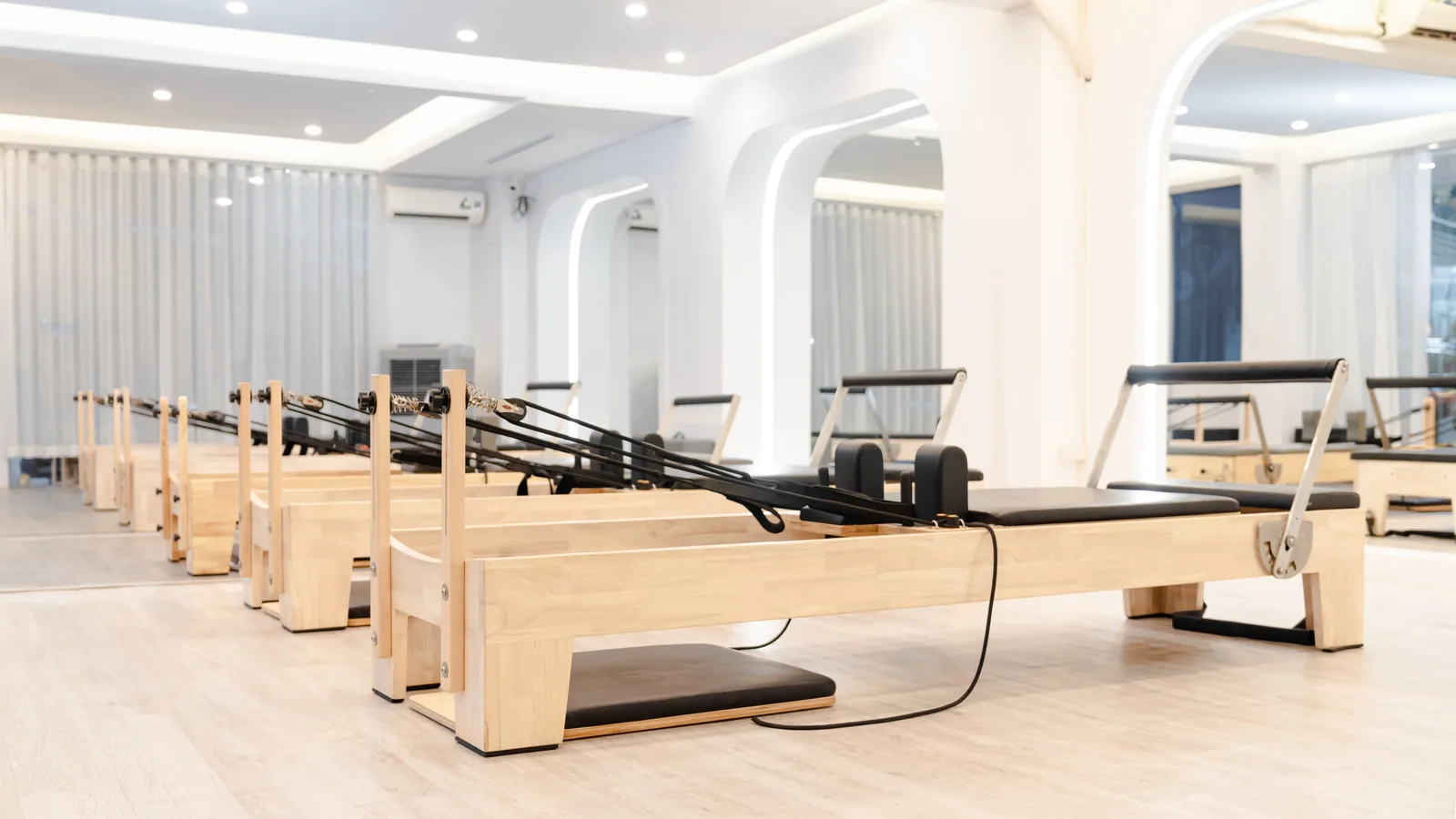
- Reformer Pilates is done on a reformer, a machine with a sliding carriage and springs for resistance. These classes are usually held in a studio.
Lots of studios, gyms and online classes offer beginner sessions, so you don’t need any experience to start.
What to expect as a beginner
Here’s what’s worth knowing before your first few classes.
- Slow doesn’t mean easy. Moving slowly with control is surprisingly hard work. Your legs might shake. That’s normal!
- There’s a whole new language. Instructors use cues like “engage your core” or “neutral spine.” Nobody gets it all straight away, so don’t worry if it takes a few classes to click.
- Easier versions are there for a reason. Instructors often show a modified version of a move. Use it! Good form matters more than keeping up with the person next to you.
- Tell your instructor you’re new. Mention any injuries too, so they can suggest changes for you.
- You might feel it the next day. Some muscle soreness after a new kind of exercise is common. Sharp pain is different, so stop and get it checked.
- Check what to bring. Some studios have their own rules about things like socks or water bottles, so it’s worth asking before your first class.
How to build a Pilates routine
The hardest part of any new habit is keeping it going after the first exciting week. Here’s what helps.
Start with a routine you can keep
It’s tempting to sign up for a class every day when you’re excited. But a routine you can keep up week after week will do much more for you than a big burst that fizzles out.
Book ahead, then write it down
If your classes need booking, do it during your weekly planning, and write each class in your planner straight away. A booked class is so much harder to skip than a vague “I’ll go sometime.” (Here’s how to plan your week in a digital planner.)
Stack it onto your day
Doing mat Pilates at home? Link it to something you already do every day, like “After I get changed after work, I’ll roll out my mat.” Write it into the routine planner, which has tables for your morning, evening and night routines with a tick box for each day.
And on low-energy days, make it tiny. Roll out the mat and do one exercise. This idea comes from Atomic Habits by James Clear, which I’ve been reading. (More in how Atomic Habits helps me plan every day.)
Pick a time that suits you
I’m a night owl (I work late into the night), so I’m a big believer that the best time for a class is the one you’ll actually show up for. Morning, lunchtime or evening, choose what fits your energy and your week.
How I fit Pilates classes into my week
This is my favorite part, because planning is kind of my thing!
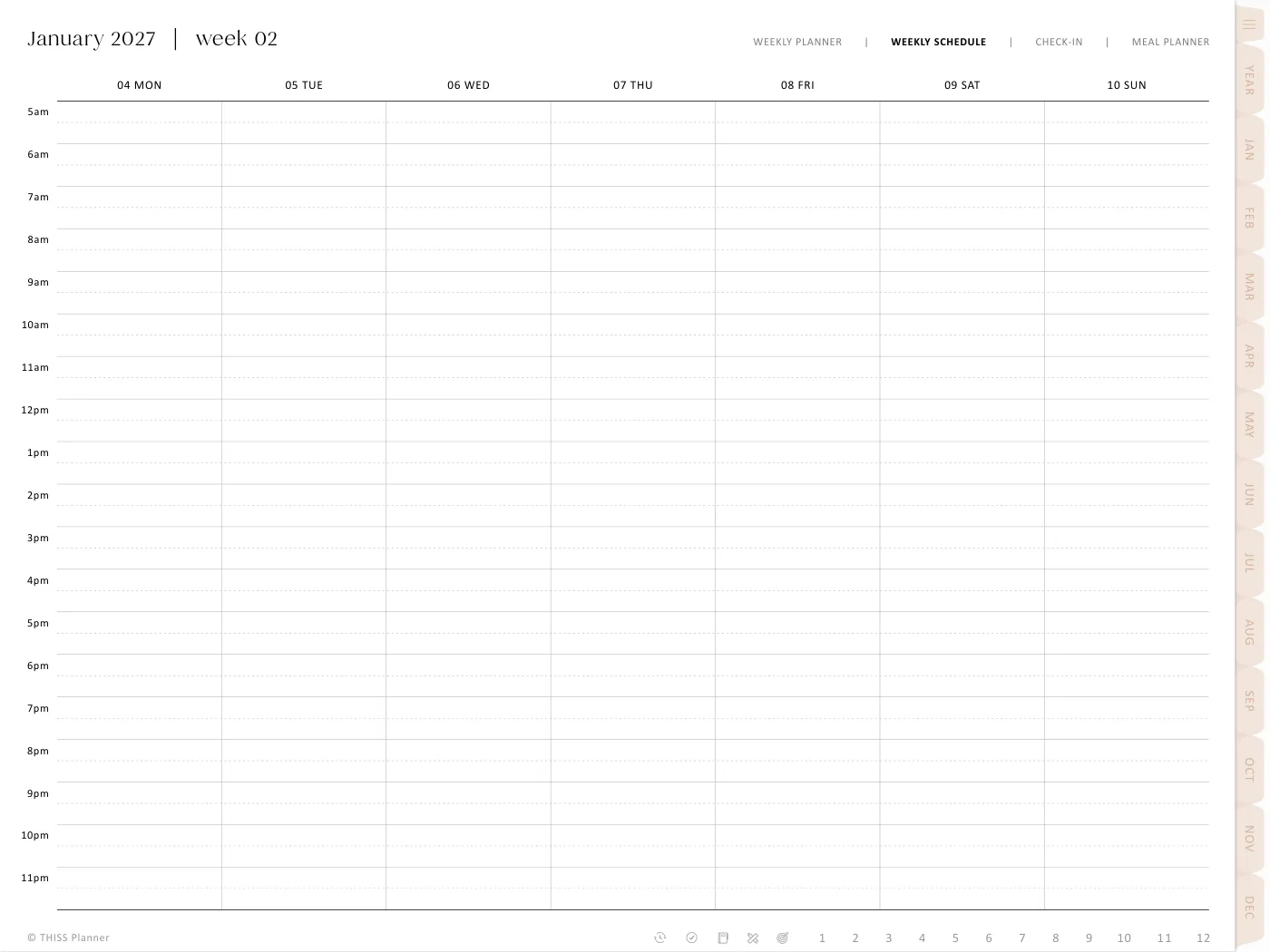
When you plan your week, the weekly schedule is where it all comes together. Block out your classes like appointments on an hourly timeline, and you can see what else is happening around them.
- Write classes in as soon as you book. Add travel time too, so you’re not rushing in late and flustered.
- Balance your week. If you do other exercise too, seeing everything on one schedule makes it easier to spread it out. I’ve also started running, which I share in how I started running as a beginner.
- Keep track of class packs and memberships. A subscriptions and memberships page is a handy place to note renewal dates, so nothing expires before you use it.
Tracking your Pilates sessions
Progress in Pilates can be quiet. You might not notice it until one day a move feels a little steadier than it used to.
That’s why it’s so nice to write it down. A few easy ways to track it:
- Daily check-in: write your session in the physical activity box, with one note on how it went.
- Habits + Trackers: tick off each session on your monthly habit tracker.
- Workout planner: plan and note your sessions in the wellness section.
- Weekly self-care tracker: because looking after your body is self-care too!
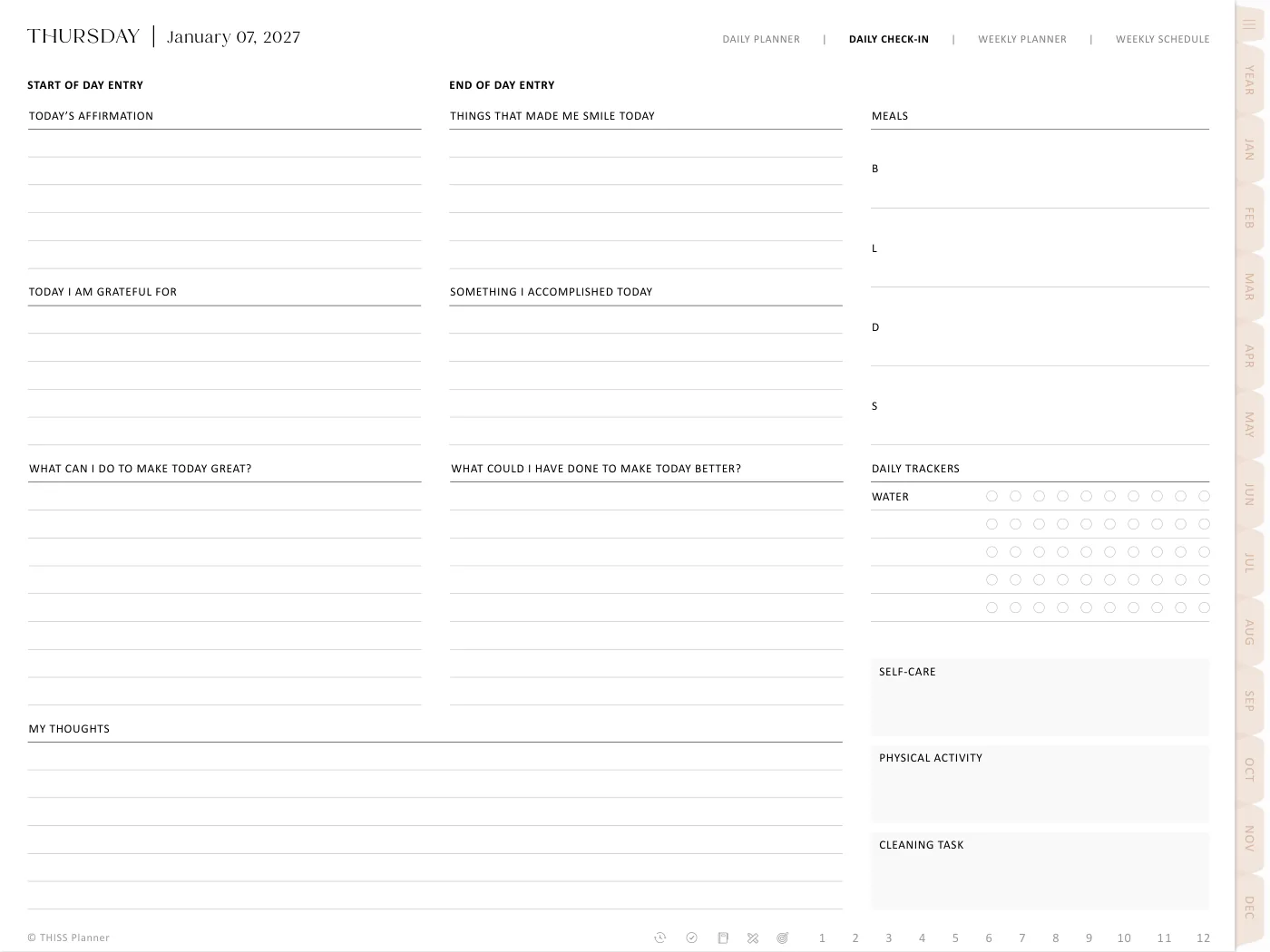
After each class, try jotting down what felt good, what was tricky, any easier versions you used and how you felt afterwards. Read it back after a month. You might be surprised how far you’ve come!
Common questions
Do I need to be flexible to start Pilates?
Nope. You start exactly where you are. Instructors can show you easier versions of moves, and beginner classes are made for people who are new.
Should a beginner start with mat or reformer Pilates?
Either can work. Look for classes marked beginner or introduction, and ask the studio or instructor which one they suggest for someone starting out.
What do I need for Pilates at home?
A mat, comfortable clothes and a bit of floor space is enough for many mat classes. Some classes use small equipment, but plenty don’t.
Be a proud beginner
Everyone in that class was a beginner once. So go slowly, laugh at the wobbly moments and write every session down. Little by little, it adds up.
I’m still learning too, and I’ll keep sharing as I go!
Keep reading: How I started running as a beginner (and how I plan it), How Atomic Habits helps me plan every day and How to stick with your digital planner all year.


