Have you ever watched someone jog past, looking all relaxed and happy, and thought, “I could never do that”?
Well, guess what. I recently started running!
And let me be really clear from the start: I am a BEGINNER. Nobody is going to mistake me for a marathon runner anytime soon. But I’m getting out there, and I’m learning a lot along the way.
So in this post I’ll share what I’m learning about running as a beginner, and how I plan it in my digital planner so I actually keep going. Because if a run isn’t in the planner, let’s be honest, it’s SO much easier to skip.
A quick note before we start. I’m not a running coach or a health professional. If you have any health concerns, or it’s been a while since you exercised, check in with your doctor before you start.
In short
- Start smaller than you think. Short, easy sessions you can repeat are better than one big run you never want to do again.
- Put your runs on your weekly schedule like appointments, with rest days planned in between.
- Track each run, even the slow ones, so you can see how far you’ve come.
- When motivation dips, keep the habit alive with a shorter session, and never miss twice.
Start smaller than you think
When you’re excited about something new, it’s so tempting to go all in. New goal, new playlist, let’s run every day this week!
Please don’t. Starting too big is one of the quickest ways to end up sore, tired and back on the couch.
A lot of beginners start by mixing running with walking, then slowly running a little more as it gets easier. Keep it easy enough that you could still chat with a friend. If it feels like too much, slow down or walk. That still counts!
This is where Atomic Habits by James Clear really helps me. One of its ideas is to make a new habit so easy to start that it’s hard to say no. Some days, the whole goal is just to get your shoes on and get out the door. (I wrote more about the book in how Atomic Habits helps me plan every day.)
Plan your runs into your week
You know how “I’ll go for a run sometime this week” turns into “oops, it’s Sunday” really fast?
The fix is to give each run a real day and time. During your weekly planning, open the weekly schedule and block out your runs like appointments. With an hourly timeline for each day, you can see exactly where a run fits around work, family and everything else. (Here’s how to plan your week in a digital planner if you’d like the full routine.)
A few things that make it easier to actually go:
- Space your runs out. Put rest days in between, especially at the start.
- Pick times you can protect. A run squeezed between two busy appointments is the first thing to get dropped.
- Stack it onto something you already do. For example, “When I get home from work, I’ll change straight into my running clothes.” Write it in the routine planner so it has a clear cue.
- Get ready the night before. Shoes by the door, clothes laid out. One less excuse.
Map out your weeks with a fitness plan
If you like to see the bigger picture, a fitness plan page is perfect for this.
Write one simple main goal at the top of your fitness plan. Keep it small and specific, something like “run for 10 minutes without stopping” (pick whatever feels right for you). Then map out your weeks underneath.
If you’re following a beginner program, copy each week’s sessions in, so you always know what’s next without having to look it up.
Track your progress (and celebrate it!)
When you’re new to running, progress can feel invisible. You’re still puffing at the end of every run, so are you even getting better?
Writing it down is how you find out. Here are some easy ways to track it in your planner:
- Walking and running log: note each run, plus a few words on how it felt.
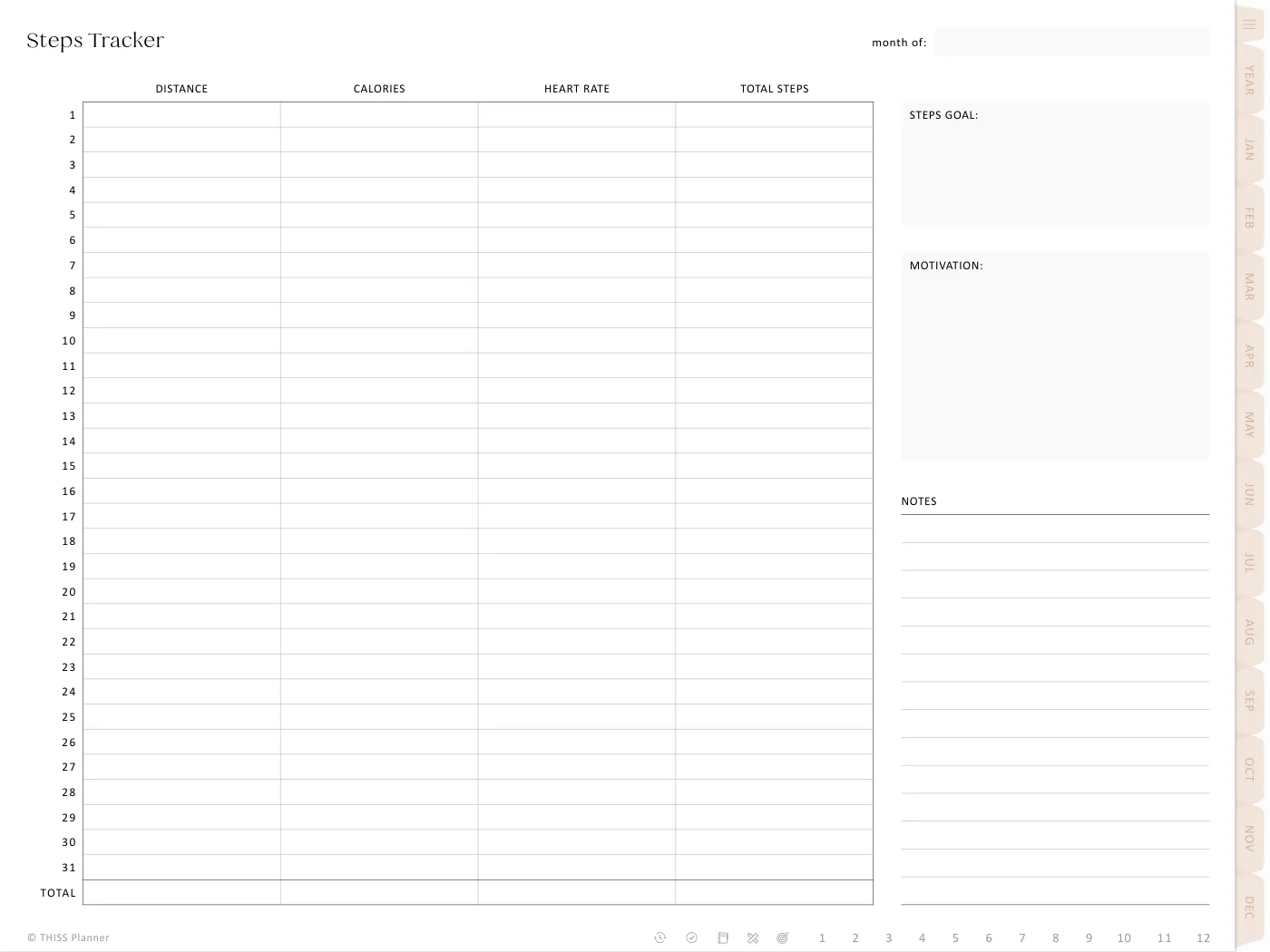
- Steps tracker: there’s a row for every day of the month, with columns for distance, calories, heart rate and total steps, and a space for your steps goal and motivation.
- Habits + Trackers: tick off each run day on your monthly habit tracker, and watch the row fill up.
- Daily check-in: write your run in the physical activity box, and add it under “something I accomplished today.” Because it is!
One of the most useful things to track as a beginner is how you FEEL, not just how far you went. “Felt easier than last week” is a huge win, and it’s so motivating to read back later.
And yes, stickers count as celebrating. Use the same sticker every time you finish a run, and a quick glance at your month shows how often you showed up.
Rest days count too
When you’re excited about a new habit, a rest day can feel like slacking off. It isn’t. Rest gives your body time to recover, and it’s part of the plan for runners at every level.
So write your rest days on the weekly schedule too. That way they feel planned, and you won’t feel guilty about them.
On rest days, use the self-care box on your daily check-in instead. A gentle walk, a stretch or an early night all count.
And listen to your body. Tired legs are normal when you’re starting out, but pain isn’t something to push through. If something hurts, rest, and see a doctor or physical therapist if it doesn’t settle.
I’ve also recently started Pilates, which I’ve written about in Pilates for beginners: what I’ve learned so far. Seeing both on one weekly schedule makes it much easier to balance the busy days and the rest days.
Staying consistent when motivation dips
Motivation is great while it lasts. Then it rains, or work gets busy, or you just don’t feel like it.
Here’s what helps beginners keep going on those days:
- Have a “bad day” version. A shorter run or a brisk walk keeps the habit alive.
- Never miss twice. Missing one run is fine. If you see a gap on your habit tracker, make tomorrow’s run a top priority on your daily page.
- Move it, don’t delete it. In Goodnotes, use the Lasso tool to move a run to another day on your schedule.
- Make it fun. A favorite playlist or podcast, a friend to run with or a nicer route can make a big difference.
- Check in weekly. Use “What didn’t go so well?” on your weekly check-in to spot what’s getting in the way, then adjust next week’s plan.
Common questions
Do I need to be fit to start running?
Not at all. Everyone starts somewhere. Start slowly, mix in walking if you need to, and if you have any health concerns, check with your doctor first.
How often should a beginner run?
There’s no one right answer. Many beginners start with a few short sessions a week, with rest days in between, and build from there. Choose something you can keep doing week after week.
Which planner pages are best for tracking running?
Start with three: your weekly schedule for planning your runs, a running log for each run, and a habit tracker for ticking off run days. A steps tracker is a nice extra if you wear a fitness watch.
Every runner starts somewhere
If you’ve been thinking about starting, consider this your sign. Start small, write it in your planner and be kind to yourself on the slow days.
I’m still right at the beginning, so we can be beginners together!
Keep reading: Pilates for beginners: what I’ve learned so far, How Atomic Habits helps me plan every day and How to plan your week in a digital planner.