Grocery List Essentials: The Staples Checklist for Every Kitchen
Never run out of the basics again. Here's a grocery list essentials checklist by store section, plus how to build a master list that makes every shop faster.
Running out of olive oil halfway through a recipe. Buying a third jar of cumin because you couldn’t remember if you had any. Coming home from the store with everything except the one thing you went for.
A good grocery list fixes all of that. This checklist covers the staples most kitchens rely on, sorted by store section, plus how to turn it into a master list that makes every shop faster.
In a nutshell
- Keep a master list of the staples you always want at home.
- Check it against your fridge and pantry before each shop.
- Add the ingredients for the meals you’ve planned this week.
- Sort your list by store section, so you shop in one loop.
- Adjust the list over time: drop what you don’t use, add what you keep buying.
How to use this checklist
Not every item will suit your kitchen. Go through the list, keep what you actually use, and cross out the rest. What’s left becomes your master list, the staples you always want on hand.
Then, before each shop, check what you’re running low on and add the ingredients for the meals you’re planning that week.
The grocery list essentials checklist
Pantry: grains, pasta and bread
- Rice
- Pasta in one or two shapes
- Oats
- Bread or wraps (bakery or freezer)
- Crackers
- Flour
Pantry: canned and jarred
- Canned tomatoes and tomato paste
- Canned beans and chickpeas
- Canned tuna or salmon
- Broth or stock
- Pasta sauce
- Peanut butter or another spread
Pantry: baking
- Sugar and brown sugar
- Baking powder and baking soda
- Vanilla extract
- Honey or maple syrup
Oils, vinegars and condiments
- Olive oil and a neutral cooking oil
- Vinegar (white, apple cider or balsamic)
- Soy sauce
- Ketchup, mustard and mayonnaise
- Hot sauce or chili flakes
Herbs and spices
- Salt and black pepper
- Garlic powder and onion powder
- Paprika
- Cumin
- Italian seasoning or dried oregano
- Cinnamon
Fruit and vegetables
- Onions and garlic
- Potatoes or sweet potatoes
- Carrots
- Leafy greens or salad
- A few seasonal vegetables for this week’s meals
- Bananas, apples or other fruit you enjoy
- Lemons or limes
Meat, fish and alternatives
- Chicken
- Ground beef or turkey
- Fish
- Tofu, tempeh or lentils
Dairy and eggs
- Eggs
- Milk or a dairy-free alternative
- Butter
- Cheese
- Yogurt
Freezer
- Frozen vegetables
- Frozen fruit
- Frozen fish or chicken
- A backup meal or two for busy nights
Snacks and drinks
- Nuts or trail mix
- Popcorn or other snacks
- Coffee and tea
Household
- Dish soap and dishwasher detergent
- Paper towels and napkins
- Trash bags
- Food wrap, foil and storage bags
- Laundry detergent
How to build your master grocery list
- Start with this checklist. Keep what you use, cross out the rest.
- Look at your go-to meals. Add any ingredients they need that aren’t on the list yet. (Here’s how to create a weekly meal plan, including a go-to meals list.)
- Sort it by store section, in the order you walk through your usual store.
- Keep it where you’ll see it: on the fridge, in your phone or in your planner.
- Review it monthly. Drop what you never buy, add what keeps coming up.
Before each shop
- Check what you have. A quick look in the fridge, freezer and pantry stops doubled-up buys.
- Plan your meals first. Add their ingredients, then top up the staples.
- Keep a running list during the week. When something runs low, add it straight away.
- Stick to the list. It’s the simplest way to cut impulse buys.
Tips to save money on groceries
- Compare unit prices (the price per ounce or pound on the shelf label), not just the package price.
- Try store brands for staples like rice, canned tomatoes and baking basics.
- Buy fruit and vegetables in season, and use frozen when fresh is expensive.
- Buy in bulk only what you’ll use before it goes off.
- Use up what you have before buying more. A pantry night once a week helps.
- Set a grocery budget and track it. (Here’s a full budget categories list.)
Trying to spend less for a while? Groceries from a planned list are usually allowed in a no-spend challenge, and this checklist makes that list quick to write.
Keeping your list in a planner
When your meal plan and grocery list live in the same place, planning dinners and writing the list become one job. In a digital planner, you can keep a master list, copy it each week, and have it on your iPad or phone at the store.
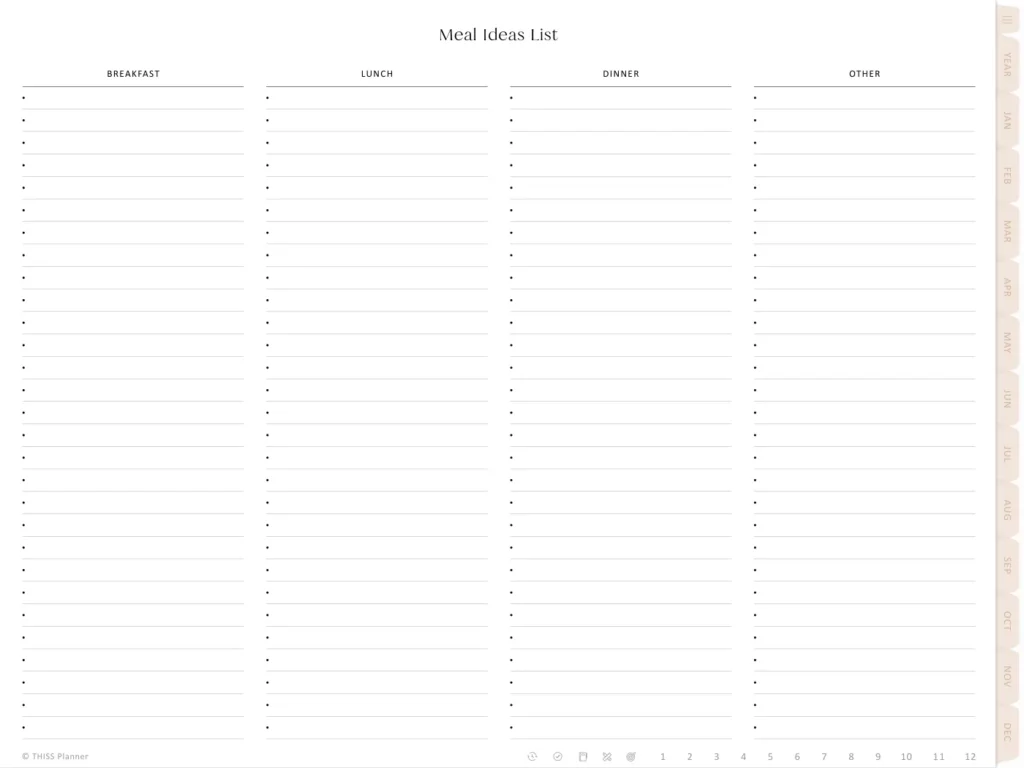
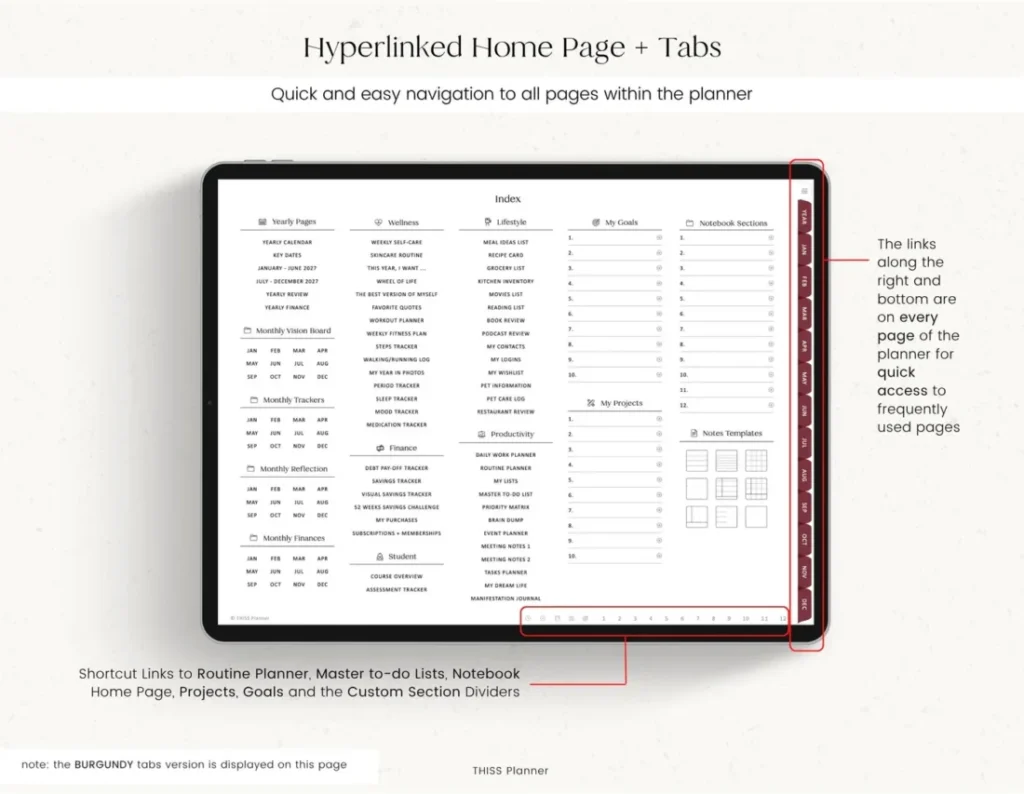
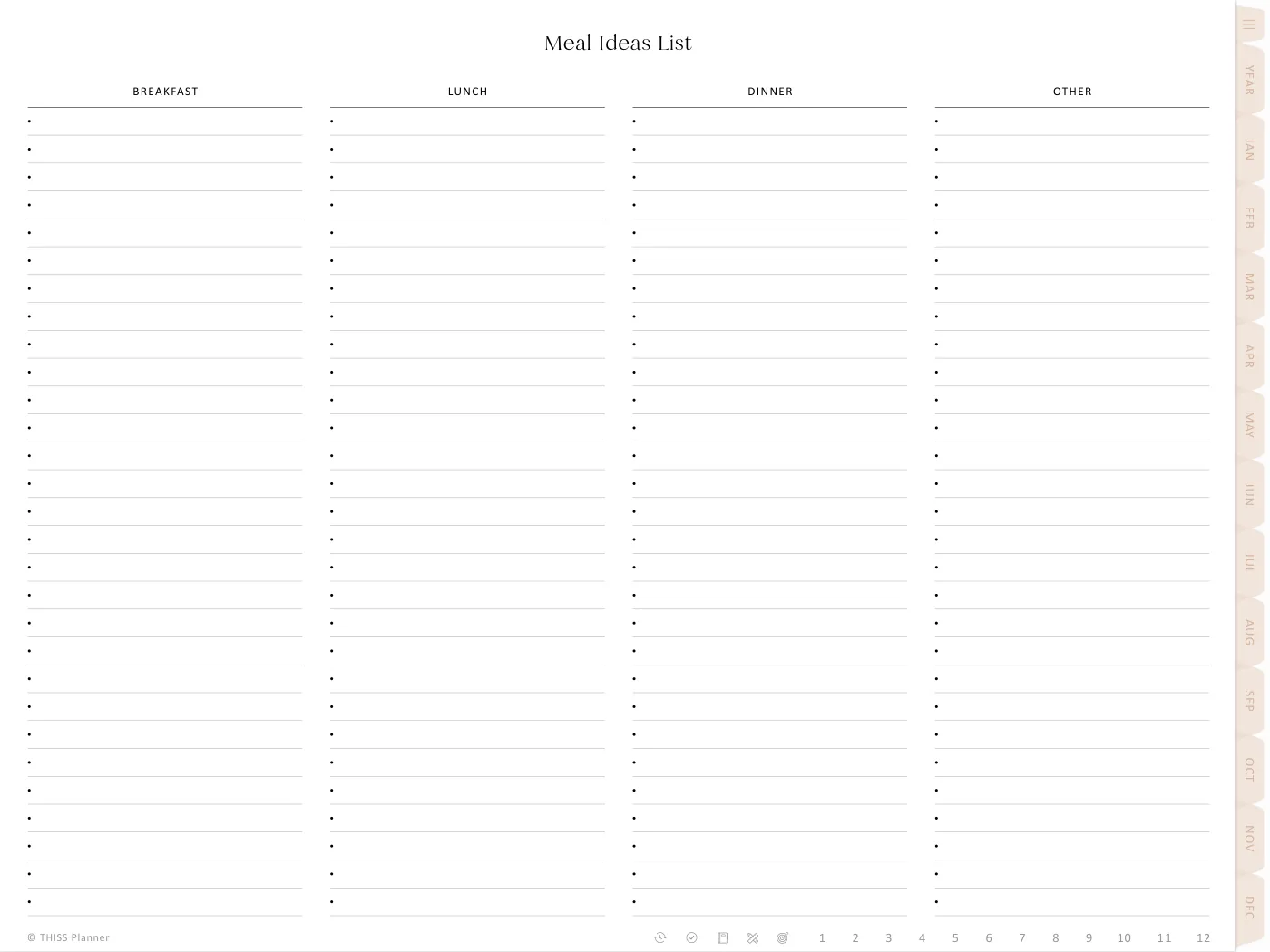
The THISS 2027 Digital Planner includes a grocery list, a kitchen inventory, a meal ideas list and recipe cards, plus a meal planner for every week.
Common questions
What should be on a basic grocery list?
Pantry staples (rice, pasta, canned goods, oils and spices), fruit and vegetables, proteins, dairy and eggs, frozen basics and household essentials. Then add the ingredients for the meals you’ve planned.
How do I make a grocery list for the week?
Plan your meals first, check what you already have, then list what’s missing. Add any staples that are running low, and sort the list by store section.
What pantry staples should I always have?
Most kitchens rely on rice, pasta, oats, canned tomatoes and beans, broth, olive oil, salt, pepper, a few spices, flour and sugar. Adjust the list to the meals you actually cook.
How can I stop forgetting things at the store?
Keep a running list during the week, sort it by store section and check it off as you shop. A master list of staples means you’re not starting from scratch each time.
Shop once, shop calm
Turn this checklist into your own master list this week. Paired with a simple meal plan, it’ll make every shop quicker, cheaper and a lot less frustrating.
Keep reading: How to create a weekly meal plan, No-spend challenge rules and Budget categories list.